Based around a camera, Kinect allows users to control and interact with the Xbox 360 console without the need to touch a controller using gestures, spoken commands, or presented objects and images.
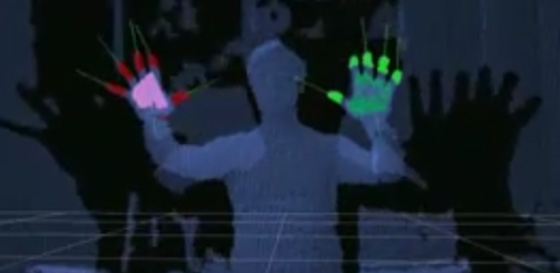
The team at MIT created a hand detection system using the Kinect camera, which recognises the position of the palms and fingers of the users.
Systems Robotics Engineer Garratt Gallagher has released this video:
Minority Report is about a “precrimes” unit (led by Tom Cruise), who prevent murders before they occur in Washington 2054.
One of the ways they do this is through an interface which allows them to see details of crimes about to be committed:
Part of the reason it has proved so prescient is that Spielberg consulted several experts for a three-day think-tank back in 1999.
He was keen to depict plausible ideas for the futuristic setting and one of the advisors was John Underkoffler, who designed the interface used in the film.
Back in February he spoke at TED about his work on the film and the influence it continues to have on user interface design.
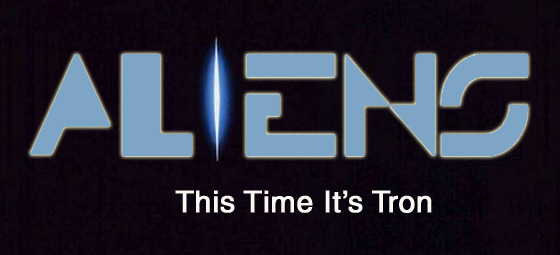
Written and directed by H5/ François Alaux, Hervé de Crécy and Ludovic Houplain, it tells a story entirely through the use contemporary and historical logos and mascots.
The Chronicles of Narnia: Voyage of the Dawn Treader (20th Century Fox): The third instalment of the Narnia series sees Edmund (Skandar Keynes) and Lucy Pevensie (Georgie Henley) return to the magical land with their cousin Eustace ((Will Poulter), where they meet up with King Caspian (Ben Barnes) for an ocean trip aboard the ship The Dawn Treader.
Directed by Michael Apted, it also stars Tilda Swinton and Simon Pegg in supporting roles. It also has a new distributor, after the relative financial disappointment of the second film, with owners Walden Media opting to replace Disney with 20th Century Fox. Given the popularity of the books and a return to a Christmas release date, this should easily top the box office this weekend, especially with the bump in 3D takings along with a wide 2D release. [Empire Leicester Square & Nationwide / PG]
The Tourist (Optimum Releasing): A thriller about an American tourist (Johnny Depp) visiting Italy, who encounters a mysterious woman (Angelina Jolie) who gets him into trouble.
Despite featuring two of the biggest movie stars on the planet, the director of The Lives of Others (Florian Henckel von Donnersmarck) and the producer of The Departed (Graham King), the buzz on this film is almost non-existent with very few reviews showing up until the week of release. It should have a decent opening weekend, but bad word of mouth might affect its long term box office. [Cineworld Wandsworth, Empire Leicester Square & Nationwide]
Somewhere (Universal): The fourth film from writer-director Sofia Coppola is the story of a pampered movie star (Stephen Dorff) living a life of excess at the Chateau Marmont Hotel in Hollywood before receiving an unexpected visit from his 11-year-old daughter (Elle Fanning).
Although this has divided critics on the festival circuit, it managed to scoop the Golden Lion at Venice and might possibly get some BAFTA and Oscar attention (although it doesn’t feel like a serious frontrunner). The opening scene sets the tone and mood, and if you are up for Coppola’s wry, stylised portrait of Hollywood, then there is much to appreciate here, especially the two lead performances, some beautiful visuals from Harris Savides and a predictably tasteful soundtrack. [Curzon Soho & Nationwide / 15]
For Colored Girls (Lionsgate UK): Tyler Perry’s latest film is adapted from Ntozake Shange’s 1975 stage play For Colored Girls Who Have Considered Suicide When the Rainbow Is Enuf. Written, directed and produced by Perry, the film features an ensemble cast including Janet Jackson, Whoopi Goldberg, Phylicia Rashad, Thandie Newton, Kimberly Elise, and Kerry Washington. [Empire Leicester Square & Key Cities / 15]
ALSO OUT
Enemies of the People (Dogwoof): Acclaimed documentary about the genocide committed by the Khmer Rouge in Cambodia which killed around two million people during the 1970s. Written and produced by Thet Sambath and Rob Lemkin [ICA Cinema & Key Cities /
In Our Name (Artificial Eye): British drama about a British soldier (Joanne Froggatt) who returns from her experiences in Iraq and struggles to cope with readjusting to society. Directed by Brian Welsh. [Curzon Renoir & Key Cities / 15]
Lemmy (Miracle Communications): A documentary about the Motorhead frontman, directed by Greg Olliver and Wes Orshoski. [Brixton, Clapham & Stratford East Picturehouses & selected Key Cities]
No Problem (Eros): Bollywood film directed by Anees Bazmee and starring Sunil Shetty, Sushmita Sen and Kangana Ranaut. [Cineworlds Feltham, Ilford, Shaftesbury Ave., Vue Acton & Key Cities / ]
On Tour (Artificial Eye): French comedy-drama directed by Mathieu Amalric, starring Miranda Colclasure, Suzanne Ramsey and Dirty Martini. [Cine Lumiere, Curzon Soho & Selected Key Cities]
Outcast (Vertigo Films): Supernatural thriller directed by Colm McCarthy and starring James Nesbit. [Apollo Piccadilly Circus & Key Cities / 18]
A Serbian Film (Revolver Entertainment): Controversial horror film directed by Srđan Spasojević about a porn star who agrees to participate in an “art film”, only to discover that he has been drafted into a snuff movie. [Key Cities / 18]
The Shop Around The Corner (bfi Distribution): Reissue of the 1940 film directed by Ernst Lubitsch, and starring James Stewart and Margaret Sullavan. [BFI Southbank, Filmhouse Edinburgh & Selected Key Cities]
The Thorn In The Heart (Soda Pictures): A French documentary directed by Michel Gondry about his aunt Suzette Gondry and her son, Jean-Yves. [Gate, Ritzy, Screen On The Green & Key Cities]
N.B. As I’m based in the UK, all of these DVDs are UK titles (apart from the imports) but if you live in a different region of the world check out Play.com or your local Amazon site and they should have an equivalent version of the film.
The Economist have partnered with PBS for a film project in which they are seeking documentary submissions over the next year.
The aim is to eventualy showcase independent documentary films from around the world and eventually screen selected segments on PBS NewsHour through in 2011-2012.
They are looking for films that:
“…offer new ideas, perspectives, and insights that not only help make sense of the world, but also take a stand and provoke debate”.
The Project is open from January 10, 2011 and will continue monthly until January 2012.
Documentary shorts and feature-length films can be be submitted and winning films will get exposure through The Economist’s YouTube channel and Facebook page, and the PBS NewsHour website, YouTube and Hulu channels.
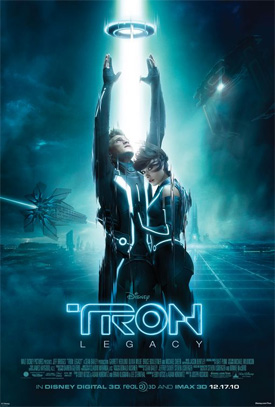
After 28 years, the Tron franchise is resurrected with a visually stunning but emotionally hollow update to the original film.
The first film was about a brilliant software engineer, Kevin Flynn (Jeff Bridges), who enters into a virtual world whilst this sequel picks up many years later as his son Sam (Garrett Hedlund) tries to solve the disappearance of his father.
Responding to a mysterious message he finds himself pulled into the world where Kevin has been trapped.
Aided by a female warrior Quorra (Olivia Wilde), father and son have to escape the new digital universe and the clutches of those who now rule it.
The original film was by no means a huge hit, but it was a pioneering film that used computer graphics and live action in a way that foreshadowed the revolution in CGI over the last 30 years.
Disney’s decision to reboot Tron for a new generation, seems to be an attempt to engage audiences who remember it and to adapt the technology driven story for the current digital age, utilising cutting edge 3D and digital effects.
On a purely technical level, the film largely succeeds.
Director Joseph Kosinski has a background in architecture and commercials and the look of the film is remarkable.
Not only are the individual visual effects impressive, but the alternate digital world of ‘The Grid’ is brilliantly realised by the effects team from Digital Domain.
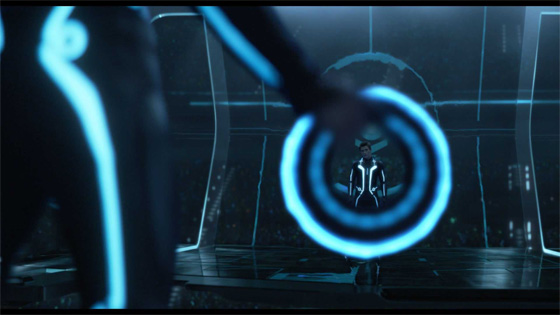
The dark, neon lit landscape is a dazzling upgrade from the first film and the stylised costumes, light cycles, discs and various vehicles all provide a feast for the eyes in both the action sequences and calmer moments.
Utilising a similar 3D camera system on which Avatar was shot has paid off, using the frame in an immersive, considered way which contrasts with recent productions which unwisely opted for retrofitted 3D in post-production.
The one visual misstep involves a digital version of Bridges, which only serves to highlight the difficulty in crossing the ‘uncanny valley‘ when using motion capture characters on screen.
But there is a deeper problem at the heart of Tron: Legacy, which is the chasm between the pioneering visuals and the writing.
The script by Adam Horowitz and Edward Kitsis feels clunky and episodic, like episodes of TV show cobbled together in a rush or levels on a computer game that are just there to be completed.
This leads to an inherent lack of drama and consequence to the material, despite the visual pyrotechnics that make it so captivating to look at. It also means the performances suffer, as the characters are often just cogs in a wheel.
Hedlund is a generic young lead who lacks charisma; in contrast, Bridges has presence and gravitas as the elder Flynn, whilst these qualities are absent in his younger alter-ego C.L.U.; Wilde looks and feels right for her part, but has little to do except kick some obligatory butt.
In supporting roles Michael Sheen seems to be doing a camper version of David Frost as a mysterious club owner and actors such as James Frain and Beau Garrett also feel like elaborate props rather than actual characters.
Despite these fundamental drawbacks, the score by Daft Punk is absolutely epic: a wonderful mixture of their trademark electronica with a full orchestra that gives the whole film an extra kick.
It is curious to predict how audiences will react to Tron: Legacy as it references a lot of the original film and yet at the same time feels quite different.
Disney have opted not to re-release the original, so its presence lingers over this sequel in a strange way: are they worried about it looking dated in comparison or just planning for releasing both films on Blu-ray and DVD at a later date?
Certainly the original, whilst groundbreaking, wasn’t a huge hit and there has to be a concern that a new generation might be a little confused as to why this new film exists and why it took nearly thirty years to warrant a sequel.
If you look closely at the end credits you’ll see the filmmakers thank the fans of Hall H at Comic-Con, the annual convention which has held such a sway over Hollywood in recent years.
This film has been a fixture there since 2008 when Joseph Kosinski and producer Sean Bailey gauged interest for the project with test footage and even earlier this year where they recorded audio from the crowd, presumably for the arena sequence.
But is there a danger of Hollywood pandering to the geek-fuelled fantasies of Comic-Con?
Given that Disney has spent a rumoured $200 million on this film, they will be anxiously hoping that mainstream audiences are as passionate as fans in Hall H.
The finished film reflects the strange journey it has had to the screen, as it is both technically dazzling and structurally disjointed.
Although Disney can expect a big opening, the film’s shortcomings as a drama and possible confusion as to what it actually is (a sequel to a semi-cult 1982 film) could mean it struggles to have an impact on the wider culture.
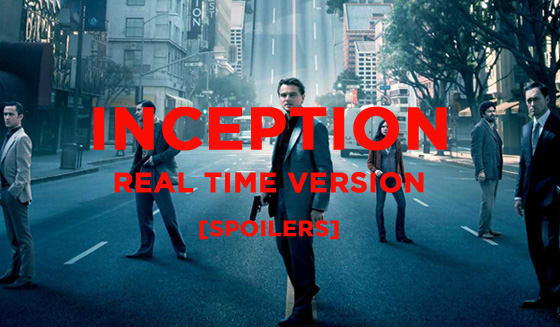
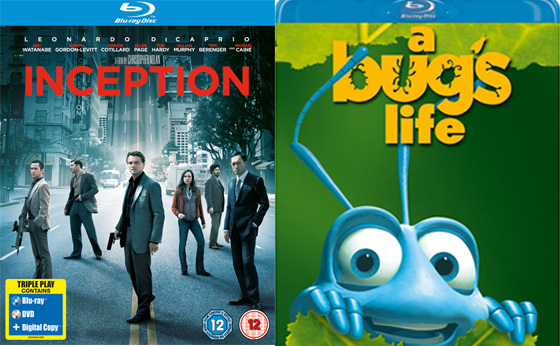
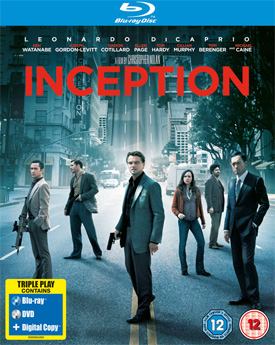
Inception (Warner Home Video): Christopher Nolan’s ambitious heist film was one of the most talked about blockbusters of the year and Warner Bros have given it a worthy Blu-ray release. The story revolves around a gang of hi-tech thieves led by international fugitive Dom Cobb (Leonardo DiCaprio), who steals valuable information from people’s dreams.
After a job on a Japanese businessman (Ken Watanabe) goes wrong, he is faced with the daunting challenge of ‘inception’: instead of stealing information, he must secretly plant some inside the mind of an wealthy tycoon (Cillian Murphy). Assembling a team of experts (which includes Joseph Gordon-Levitt, Ellen Page and Tom Hardy) who can help him execute the mission, he must also deal with his own troubled past, which endangers his ability to do the job at hand. [Read full review] [Buy it on Blu-ray / DVD / Triplepack]
A Bug’s Life (Walt Disney Studios Home Ent.): Pixar’s seconf feature length film suffered from following the groundbreaking Toy Story (1995) but is still way above the standards of equivalent fare. It is the story of an ant named Flik (David Foley) who helps his colony defend itself against the tyranny of the local grasshoppers (led by Hopper, voiced by Kevin Spacey).
As with other Pixar films, the story is impressively assembled, whilst the humour and emotions are nicely balanced. It hasn’t achieved the affection of Pixar classics such as Finding Nemo (2003) or WALL-E (2008) but there is still a lot to enjoy here and keep a look out for the faux-outtakes over the end credits. [Buy it on Blu-ray / DVD]
ALSO OUT
Alice in Wonderland (Walt Disney Studios Home Ent.) [Blu-ray / with 3D Version] Chaos/The Bank Job (Lionsgate UK) [Blu-ray / Normal] Funny Games (Kaleidoscope Home Ent.) [Blu-ray / Normal] Shrek: Forever After – The Final Chapter (DreamWorks Animation) [Blu-ray / Normal] Supernatural: The Complete Seasons 1-5 (Warner Home Video) [Blu-ray / Normal] The Sorcerer’s Apprentice (Walt Disney Studios Home Ent.) [Blu-ray / Normal] The Twilight Saga: Collection – The Story So Far (Entertainment One) [Blu-ray / Steel Book] The Twilight Saga: Eclipse (E1 Entertainment UK) [Blu-ray / Normal] Tinker Bell and the Great Fairy Rescue (Walt Disney) [Blu-ray with DVD] War/The Forbidden Kingdom (Lionsgate UK) [Blu-ray / Normal] White Material (Artificial Eye) [Blu-ray / Normal]
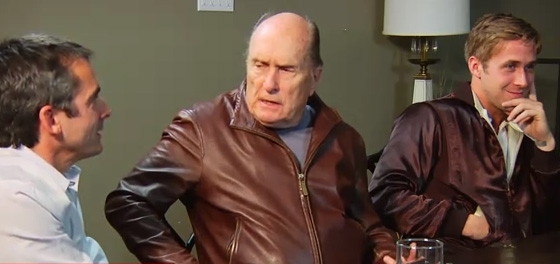
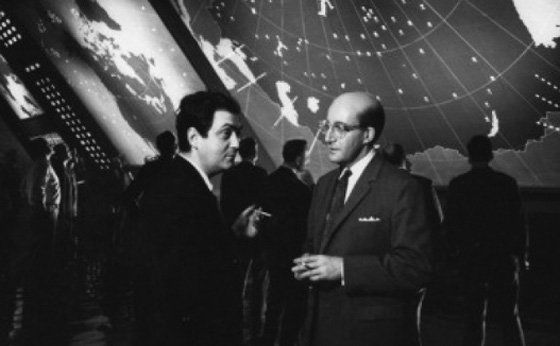
In a recent round table interview Robert Duvall expressed his anger at director Stanley Kubrick for making actors do so many takes.
The veteran actor was taking part in an awards season discussion for The Hollywood Reporter with fellow actors Jesse Eisenberg, Mark Ruffalo, Colin Firth, Ryan Gosling and James Franco.
When he heard David Fincher made Eisenberg do fifty takes in The Social Network he seemed aghast (at 0.53) and put forward his views on Kubrick and the performances in The Shining and A Clockwork Orange (at 2.37).
The discussion of Fincher continues in this second video with Franco chipping in with his opinion and Ruffalo explaining how Fincher’s process worked in Zodiac.
Duvall admits that Fincher got good performances in Seven (1995) and even reveals that he turned down a part in the film.
Christopher Nolan’s ambitious heist film was one of the most talked about blockbusters of the year and Warner Bros have given it a worthy Blu-ray release.
The story revolves around a gang of hi-tech thieves led by international fugitive Dom Cobb (Leonardo DiCaprio), who steals valuable information from people’s dreams.
After a job on a Japanese businessman (Ken Watanabe) goes wrong, he is faced with the daunting challenge of ‘inception’: instead of stealing information, he must secretly plant some inside the mind of an wealthy tycoon (Cillian Murphy).
Assembling a team of experts (which includes Joseph Gordon-Levitt, Ellen Page and Tom Hardy) who can help him execute the mission, he must also deal with his own troubled past, which endangers his ability to do the job at hand.
For writer-director Nolan, this is a return to the territory of previous films such as Memento (2000) and The Prestige (2006), where he explores the themes of illusion and reality whilst playing an imaginative game with the audience.
We are firmly in the realm of science-fiction here, but interestingly the settings are very real world: imagine if Michael Mann had decided to mash up The Matrix with Ocean’s Eleven and you’ll get some idea of the terrain here.
With some concessions, the subconscious dream worlds appear as realistic as the conscious waking world, creating a persistent question as to which is real: a clever conceit, given that cinema itself is arguably the closest art form to a dream.
There are many stylistic nods to action films of the 1960s: a team of experts assembled for a job; glamorous locations; vivid production design and costumes; and a sense of mystery and wonder.
The huge success of The Dark Knight has allowed Nolan a particularly large canvas on which to paint, and he has filled it with gleeful abandon, mixing the traditions of the spy thriller and heist movie inside a surreal, shifting dreamscape.
Cutting between the real and virtual worlds bears similarities to The Matrix (minus the bleak, sci-fi dystopia) and Avatar (minus the alien planet) and Inception appears to be drawing from the same cultural well as those films.
Their success appears to be how they tap into the virtual nature of modern existence (through social networks and the web) as well as the escapist nature of watching a film, as a reality unfolds before us on screen.
All this is helped by being presented in an intriguing story on a grand scale, with the technical aspects especially outstanding.
The visual effects (by Double Negative and Plowman Craven) are stunning and augment the in-camera action so well that they never feel like conventional CGI.
In addition, there are some highly imaginative sets overseen by special effects supervisor Chris Corbould, especially one amazing sequence involving a hotel, which bears comparison to similar scenes in Stanley Kubrick’s 2001.
A special mention must also go to editor Lee Smith, as the third act involves some inventive warping of time and space, which must have proved a particular challenge in the edit suite.
Much of Nolan’s previous work rewards repeated viewing, revealing a meticulous attention to detail and subtleties not always apparent first time around.
The same is true for this film and viewers will be pleased that it is up to very high technical standards of Nolan’s recent films on Blu-ray (The Prestige and The Dark Knight), arguably surpassing them.
Nolan and his D.P. Wally Pfister are take great care in how they shoot and master their films and visually Inception looks stunning in HD, with the varied landscapes of the film and all the action sequences depicted with amazing clarity and detail.
The audio is equally impressive and, if you have the right sound system, the powerful DTS HD Master Audio Track is crisp and powerful, especially in the action sequences.
SPECIAL FEATURES
Warner Brothers have released this in a three-disc version: Disc One includes the film with a special ‘Extraction Mode’ feature which allows viewers to access making of footage; Disc Two is dedicated solely to special features; and Disc Three contains the DVD and Digital Copy data.
Extraction Mode (Disc 1, HD): This allows viewers to access over 45 minutes of behind-the-scenes featurettes alongside with Nolan and his crew as they discuss the ideas, characters, performances, and visual effects. Rather than use the traditional Picture-in-Picture mode it goes between the main film and Warner’s making-of materials. (An added bonus is that the individual behind-the-scenes featurettes can also be accessed from the main menu.)
5.1 Inception Soundtrack (Disc 2, HD, 39 minutes): Hans Zimmer’s epic score is presented in 5.1 surround sound via a DTS-HD Master Audio mix and the only negative here is that the screen remains empty during all of them.
Dreams: Cinema of the Subconscious (Disc 2, HD, 44 minutes): Joseph Gordon Levitt hosts this documentary about dreams which features doctors, psychologists, scientists and other experts to discuss the science of sleep.
Inception: The Cobol Job (Disc 2, HD, 15 minutes): This was released on the website to tie in with the theatrical release and is a Motion Comic, explaining the backstory of how Cobb, Arthur and Nash were enlisted by Cobol Engineering.
Project Somnacin: Confidential Files (Disc 2, HD): This allows you to access the secret tech files for Inception’s dream-share technology through a BD-Live portal.
Conceptual Art Gallery (Disc 2, HD): Over thirty pieces of concept art and pre-production images.
Promotional Art Archive (Disc 2, HD): A collection of the US and international posters for the film.
Trailers and TV Spots (Disc 2, HD, 16 minutes): A theatrical teaser, two full trailers and thirteen TV spots.
There is also a Limited Edition Briefcase edition that consists of a briefcase containing the Triple play pack (Blu-ray/DVD/Digital Copy), a spinning top, theatrical Dream Machine leaflet and four art cards showing the main key art.
Inception is out on Blu-ray and DVD on Monday 6th December from Warner Home Video
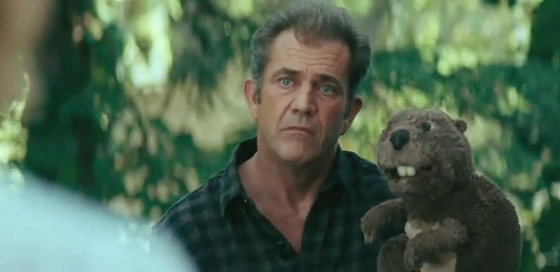
The first trailer for The Beaver has arrived with a weird voiceover and an unexpected feel-good vibe.
A dark comedy about the depressed head of a toy company (Mel Gibson) who uses a beaver handpuppet to communicate with his wife (Jodie Foster) and family, it has an interesting back story.
Directed by Foster, the script by Kyle Killen attracted a lot of buzz by topping the 2008 Blacklist, an unofficial industry poll of the best unproduced screenplays.
However, Gibson’s recent phone-related meltdowns posed a dilemma for distributor Summit Entertainment and the release was put on hold whilst they decided to let things cool down.
The UK release date has already been set for February 11th and a Spring release in the US now looks likely.
Some things to note about the trailer: if you look carefully you’ll notice Jennifer Lawrence (a likely Oscar nominee for Winter’s Bone); Gibson’s beaver voice sounds like Ray Winstone; and Foster’s line near the end (“I’ll fight for you…”) feels autobiographical given her support for Gibson during his recent woes.
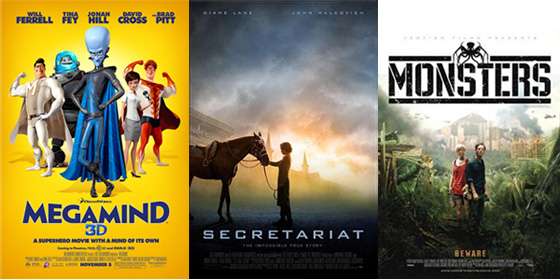
Megamind (Paramount): The latest animated film from the DreamWorks stable is a riff on the superhero genre from the perspective of a super villain. When the evil Megamind (Will Ferrell) somehow manages to kill his nemesis Metro Man (Brad Pitt), he faces the challenge of having no-one left to fight, so he creates a new foe, Titan (Jonah Hill) in order to impress a female reporter (Tina Fey).
Directed by Tom McGrath, it bears many similarities to The Incredibles (2004) but is witty, well paced and makes imaginative use of 3D. Family audiences made this a big hit in the US and it should easily claim the top spot in the UK this week. [Paramount Vue West End & Nationwide / PG]
Secretariat (Walt Disney): Drama based on the life story of Penny Chenery, owner of legendary US racehorse Secretariat, who won the Triple Crown in 1973. Chenery (Diane Lane) is a housewife takes over her ailing father’s Virginia stables, and despite her lack of experience, with the help of a veteran trainer (John Malkovich) she manages to navigate the world of horse racing.
Mixed to good reviews in the US didn’t help it at the box office where it was a relative disappointment. Audiences in the UK may less familiar with the story, so Disney faces a challenge selling this potential cinemagoers. [Empire Leicester Square & Nationwide / U]
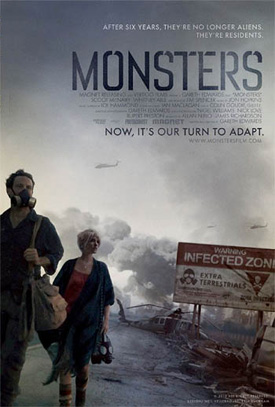
Monsters (Vertigo Films): Set a few years after mysterious alien creatures have landed in Mexico, a photojournalist (Scoot McNairy) is ordered to escort his publisher’s daughter (Whitney Able) to the safety of the US. However, due to various circumstances it becomes a difficult task as they venture through the ‘infected zone’, which contains various giant monsters which can harm humans and property.
A curious hybrid of mumblecore and monster movie, this marks an impressive debu effort from director Gareth Edwards, who also shot the film and did the impressive visual effects.
Although internet buzz has been loud on this film, multiplex audiences may be disappointed to learn that it is a talky road movie in which monsters appear intermittently. So whilst this auspicious debut it will get good reviews, the box office may not be as impressive as some expect. [Curzon Soho, Screen On The Green, Vues Islington, West End & Nationwide / 12A]
ALSO OUT
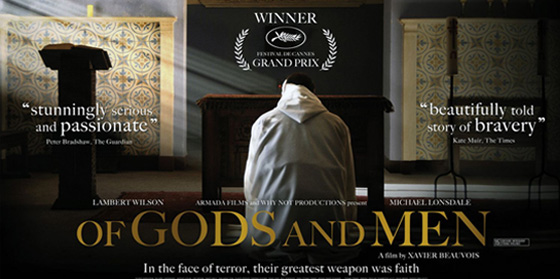
Of Gods And Men (Artificial Eye): French drama from director Xavier Beauvois based on the kidnapping and murder of Cistercian monks in Algeria by fundamentalists in 1996.
Starring Etienne Comar, Lambert Wilson and Michael Lonsdale, it was one of the favourites for this year’s Palme D’Or at Cannes, before losing out to Uncle Boonmee. Hardcore cinephiles may make this do respectable arthouse business. [Curzons Mayfair, Renoir, Richmond, HMV Curzon Wimbledon & N’wide / 15]
Miral (Warner/Pathe): Based on the novel by Rula Jebreal, this drama is about an orphaned Palestinian girl (Frieda Pinto) growing up during the Arab-Israeli war, who finds herself gradually drawn into the conflict.
Normally a film from director Julian Schnabel would be a significant release but poor reviews on the festival circuit effectively killed the buzz and any awards prospects it may have harboured. Mixed reviews in the UK, along with a tricky subject matter, will present significant challenges for this to do decent limited release box office. [Key Cities / 12A]
Bathory (Metrodome Distribution): Historical drama tracing the life of Slovakia’s infamous mass murderer, starring Anna Friel and directed by Juraj Jakubisko. [Prince Charles Cinema / 15]
Rare Exports: A Christmas Tale (Icon): A strange Christmas film from Finnish director Jalmari Helander, about an evil Santa Claus rising from the grave. [Odeon Covent Garden & Nationwide / 15]
The Be All & End All (Verve Pictures): UK drama about two teenagers from Liverpool (Josh Bolt and Eugene Byrne) on a mission after one of them gets sick. [Empires Basildon, Leicester Square, Vue Shepherds Bush & Key Cities / 15]
Easier With Practice (Axiom Films): A low budget US indie film about a lonely author (Brian Geraghty) on a campus book-tour who engages in an unusual relationship on the phone. [Key Cities]
Freakonomics (Optimum Releasing): A documentary based on the 2005 bestselling book with several contributions from filmmakers including Alex Gibney and Eugene Jarecki.[Selected Key Cities / 12A]
Legend Of The Fist: The Return Of Chen Zhen (Metrodome Distribution): A Hong Kong action film set during World War Two starring Donnie Yen as a masked avenger taking on the Japanese invaders. [The Ritzy / 18]
Love Life (Yellow Knife Releasing): A romantic drama starring Carice Van Outen and Barry Atsma, which was a big hit at the Dutch box office. [Apollo Piccadilly Circus & Key Cities]
The Warrior’s Way (Entertainment): A drama about warrior-assassin () who hides in a small American town after turning down a job. It stars Danny Huston, Dong-gun Jang, Geoffrey Rush, Jang Dong-Gun, Kate Bosworth and Tony Cox. [Nationwide / 15]
Road To Las Vegas (ICA Cinema): Documentary from director Jason Massot about a homeless American family and their struggle to survive in Las Vegas. [ICA Cinema]
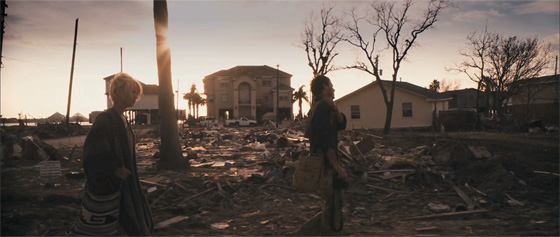
A low budget monster movie fused with a mumblecore romance is a refreshing change for the genre even if excitement is lost at the expense of mood.
Set a few years after mysterious alien creatures have landed in Mexico, a photojournalist (Scoot McNairy) is ordered to escort his publisher’s daughter (Whitney Able) to the safety of the US.
However, due to various circumstances it becomes a difficult task as they venture through the ‘infected zone’, which contains various giant monsters which can harm humans and property.
Although it begins with a dramatic opening sequence, director Gareth Edwards has opted to invert the traditional monster action movie with a greater focus on personal relationships, as creatures for part of the background atmosphere.
Shot on a low budget and relying heavily on improvisation, the film paints a convincing picture of life during a social crisis, as the characters are forced to improvise and travel with a constant threat lurking in the background.
Technically the film duplicates the look of much bigger budget rivals with clever use of digital cameras and also uses the landscapes of Guatemala, Mexico and Texas to full effect.
A special effects professional, Edwards utilises his skills to augment the natural landscapes with digitally created objects including helicopters, enormous barriers and various fantastical creatures.
For the most part this creates a highly believable setting, further heightened by the naturalistic performances from his two leads and the non-actors who populate the supporting cast.
McNairy and Able have a chemistry and a believable awkwardness which provides a solid foundation for what is essentially a road movie as they journey with bodyguards and mercenaries to the US border.
Shot guerrilla-style, the film has an impressively convincing feel which stands out because it eschews many of the conventions of the monster movie, even though the setup has many similarities to Cloverfield (2008) and District 9 (2009).
It could be argued that it is too successful in sacrificing adrenaline for realism. Apart from a couple of sequences, especially the climax, audiences might be surprised at the lack of excitement on screen.
More of a relationship movie than one might, for a film called Monsters there isn’t actually a lot of monster action in it.
This paradox means it lacks the traditional excitement of the genre, but it still has a unique flavour as a kind of mumblecore sci-fi drama and a clever, narrative twist should provide audiences with a talking point as they leave the cinema.
Technically it punches well above its weight, with Edwards combining several roles with impressive aplomb: in addition to directing he also served as D.O.P and visual effects artist.
But this is an accomplished film across the board: the effective use of sound, Colin Goudie’s editing and an ambient electronic score by Jon Hopkins are also crucial in giving the film a convincing feel and atmosphere.
Monsters is a striking debut and, although probably costlier more than some reports have suggested, bodes well for Edwards’ future efforts as a director.
Subzin is a search engine that allows you to find phrases in movies and TV shows.
Just enter your favourite quote and it should find the relevant title and tell you the exact the exact time it appears, with links to Neflix if available.
I’ve tried it with a few films and so far it looks impressive.
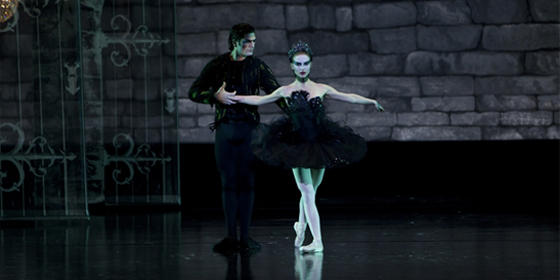
Fox Searchlight have released a new video for Black Swan detailing the production design by Thérèse DePrez.
She and director Darren Aronofsky discuss their ideas behind the look of the Swan Lake set, the colour palette and the extensive use of mirrors in the film.
Some Oscar pundits have felt that Black Swan is too dark a film to get widespread Oscar recognition, but although more conservative viewers may be put off by the wilder aspects, it deserves to be a strong contender across multiple categories.
Not only is Natalie Portman now gaining serious traction for Best Actress, but the sheer quality of the technical aspects (cinematography, costume and production design) may well give it a boost as audiences in the US finally get to see it.
Plus, in recent years haven’t Academy voters increasingly gone for darker and more contemporary films such as The Hurt Locker, No Country for Old Men and The Departed?
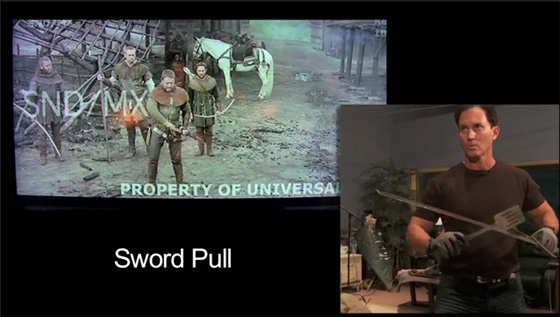
Soundworks have released a video showing the importance of Foley in recreating sounds for a film.
Veteran Foley artist Gary Hecker has worked on over 200 films in a 30-year career.
The video demonstrates how created sounds for Robin Hood and 2012 from within his studio:
Among Hecker’s recent credits are The Taking of Pelham 1 2 3, Angels & Demons, Watchmen and the Spiderman trilogy.
Foley art gets its name from Jack Foley who helped pioneer the art of creating additional sound to motion pictures with the advent of talkies in the late 1920s.
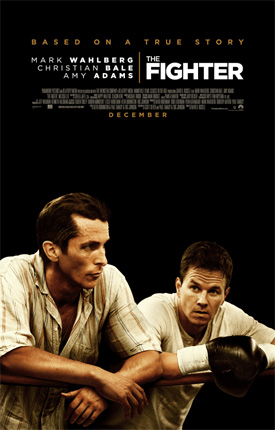
Although it follows the well worn traditions of a boxing drama, this tale of fighter ‘Irish’ Micky Ward is elevated by some fine acting and energetic direction.
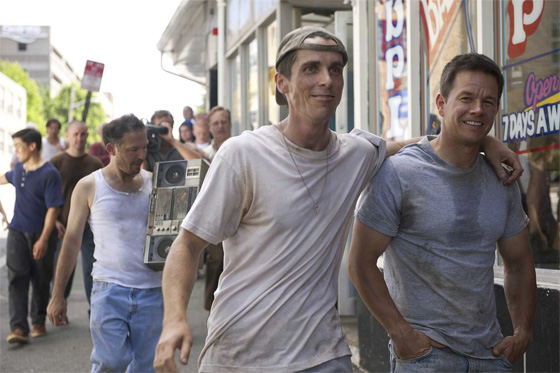
Based on real events, it is the story of two very different fighters from Lowell, Massachusetts: Micky (Mark Wahlberg), a welterweight hoping to establish himself as a prize fighter; and Dickie Eklund (Christian Bale), his half-brother and trainer, whose own boxing career fizzled out into crack addiction.
It is also explores the wider tensions within their large Irish family, which include his tough mother-manager (Melissa Leo), father (Jack McGee) and several sisters.
The central drama is powered by Micky’s inner conflicts as he is forced to choose between his increasingly unstable family setup or opt for a new trainer and management on the advice of others, including his bartender girlfriend (Amy Adams).
Viewers will find little new in the general framework of this film: a fighter has to overcome obstacles, juggle professional needs and personal relationships and suffer setbacks before getting a chance at redemption through a climactic fight.
So far, so familiar, but what elevates The Fighter above the sub-genre are some brilliant performances and canny direction: the cast is uniformly excellent and O’Russell digs deep into these characters rather than just coasting on genre tropes.
Wahlberg is restrained but sympathetic in the title role (reminiscent of his breakout role in Boogie Nights) and he physically convinces as a professional boxer.
Bale is sensational as his brilliant but flawed mentor.
He admittedly has the showier part but, like his turns in American Psycho (2000) and The Machinist (2004), his physical transformation is remarkable and he injects Dicky with an intoxicating charm.
In key supporting roles, Leo is tough and brilliantly overbearing as the mother whilst Adams matches her, giving her potentially clichéd ‘girlfriend role’ a lot more substance than is usual for films in this genre.
Working from a screenplay by Scott Silver, Paul Tamasy and Eric Johnson, director David O’Russell uses his considerable skills to transcend the limitations of the conventional boxing movie.
Part of this involves some brilliant camerawork from Hoyte Van Hoytema, which makes great use of handheld and Steadicam, drawing us in to the world of the characters and infusing the film a restless, raw energy.
Another clever element is the visual look of the boxing sequences, shot on video to duplicate the TV look of HBO pay-per-view fights in the 1990s, with ringside reactions, instant-replays and image pixilation.
This has a parallel in the HBO crew that follow Dicky around for a documentary about his struggles and it could be argued that the title may refer to both brothers.
Like his best films, O’Russell seems to inspire technical excellence across the board: the acting, cinematography, Pamela Martin’s editing, and the convincing period detail are all stellar and they combine to create a convincing portrait of the boxing world.
His most recent film Nailed was shut down after financial problems, and may not even be released, but like Dicky he is a brilliant talent with a loyal champion in Mark Wahlberg, who was instrumental in getting this film made.
It is a shame that since Three Kings, one of the best and most subversive films released by a major studio, that he has struggled to make more inside the Hollywood system.
The Fighter is a compelling comeback story, not just of a boxer and his trainer, but also of its director.
The Fighter is released in the US on December 18th and in the UK on February 4th 2011
Cats and Dogs: The Revenge of Kitty Galore (Warner Home Video) Dexter: Season 4 (Paramount Home Entertainment) Downton Abbey: Series 1 (Universal/Playback) Monsieur Hulot’s Holiday (BFI) Playtime (BFI) Sex and the City 2 (Warner Home Video) Shogun Assassin: Special Edition (Eureka) Splice (Optimum Home Entertainment) Step Up 3 (Universal Pictures) The A-Team (20th Century Fox Home Ent.)
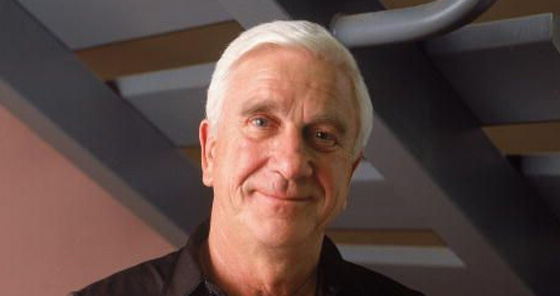
Veteran comedy actor Leslie Nielsen has died at the age of 84.
Most famous for his roles in the comedies Airplane! (1980) and The Naked Gun (1988), his career stretched back to the 1950s with roles in over 100 films and TV shows.
Nielsen was born in Regina, Saskatchewan in Canada in 1926 and became a radio announcer after serving in the Royal Canadian Air Force during WWII, before studying at Toronto’s Academy of Radio Arts, which was run by CBC commentator and future Bonanza star Lorne Greene.
After a few years in radio, he became an actor in New York and appeared in TV shows such as Tales From Tomorrow before making his film debut in Ransom! (1956).
But with the exception of his supporting roles in Forbidden Planet (1956) and The Poseidon Adventure (1972), much of his work during this period involved supporting parts (often as a heavy).
It was later in his career that he found fame when he was cast as a serious doctor in the classic Zucker-Abrahams-Zucker spoof Airplane! (1980).
This led to the lead role of inept police lieutenant Frank Drebin on Z.A.Z.’s TV series Police Squad! (1982), which achieved
cult fame for its rapid rate of inventive gags and distinctive intros which killed off the guest star (which included Nielsen’s old teacher Lorne Greene in the pilot episode).
A groundbreaking show, it saw Nielsen receive an Emmy nomination for outstanding lead actor in a comedy series.
Despite being cancelled after 6 episodes, Paramount later revived the series as the hilarious spin off film The Naked Gun (1988) and its box office success led to two sequels.
This new found fame meant Nielsen was increasingly typecast in lesser spoofs although his turn as US President in Scary Movie 3 (2003) and Scary Movie 4 (2006) provided some good laughs at the expense of President Bush.
He died due to complications from pneumonia at a hospital near his home in Fort Lauderdale, Florida.
Nielsen married four times and is survived by his fourth wife Barbaree Earl and three daughters as well as his brother, Eric, who was deputy prime minister of Canada from 1984 to 1986.
They asked 85 critics from across the globe to select their five favourite films of the past year and the titles that appeared the most were then selected for this list which will appear in their January 2011 issue.
(Note that the list can be a little out of sync with US and foreign release dates).
The final selection has already reached the magazine subscribers, although it won’t be on the Sight and Sound website until December 7th.
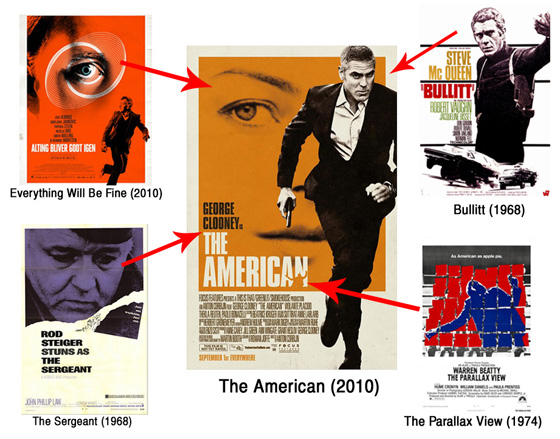
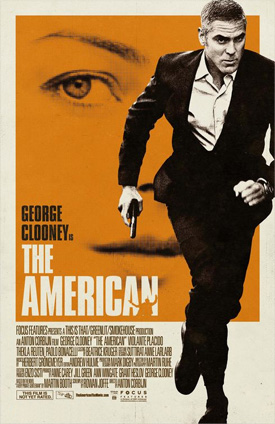
One of the most striking film posters this year was for The American, but what made it so distinctive?
When LA-based Mojohouse released the first one sheet for Anton Corbijn’s film, about an enigmatic American lying low in Italy, there was a lot of talk about the retro design.
With its two-color printing, its high-contrast photographs, its monochrome rectangle of color and its billing block within a white frame, it could be a lost object from that era.
Rod Steiger’s The Sergeant (1968) appears to be a particularly strong influence, both in the look and billing of the star.
It is also worth comparing how the lead actor is depicted on the poster: note the similarities between the black and white image of Clooney and Steve McQueen on the poster for Bullitt (1968).
Another trend of the late 1960s they appeared to have picked up on is the placing of a small photo, or drawing, next to the title and credits.
Finally, a recent Danish film, Everything Will Be Fine (2010), has a very similar poster: notice the eye, which forms part of an orange backdrop to which a character is running from.
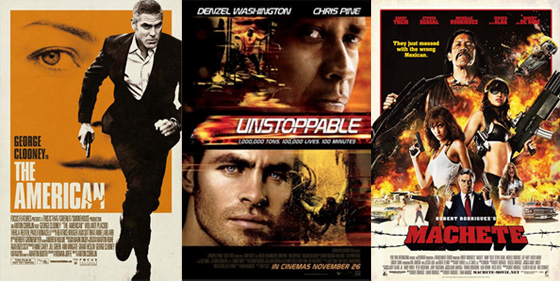
The American (Universal): Anton Corbijn’s second film as a director is a stylish, existential drama about an enigmatic American hiding out in a remote Italian town. Beginning with a prologue in wintry Sweden, we first see the titular character, Jack (George Clooney), as circumstances force him to relocate to the Abruzzo region in Italy.
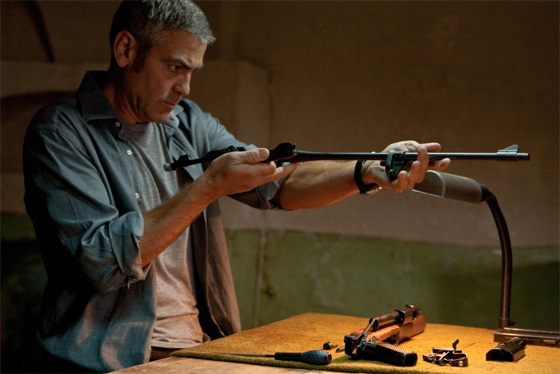
There we slowly learn more about him: he makes a rifle for an assassin (Thekla Reuten) under the orders of his handler (Johan Leysen), befriends a priest (Paolo Bonacelli) and falls for a local prostitute (Violante Placido), as he begins to think about changing his life.
Although The American appears to be channelling the minimalist crime dramas of Jean-Pierre Melville (especially Le Samouraï), the form and structure resemble a Sergio Leone western, with its story of a stranger arriving in a new town, extended silences and widescreen cinematography.
As a vehicle for Clooney, this is an unusually European film – despite being a US/UK production – and the slow burn pacing and gradual revelations will probably limit its appeal to a mass audience.
The trailer and TV spots have misleadingly sold it as an action thriller but its respectable opening in the US probably meant the box office ends were justified by the marketing means. [Empire Leicester Square & Nationwide / 15]
Unstoppable (20th Century Fox): Tony Scott’s latest film is stimulating mainstream fare and, after last year’s remake of The Taking of Pelham 123, he has returned with another film involving a train and Denzel Washington.
The setting this time is rural Pennsylvania and, inspired by true events, it deals with two railway engineers (Denzel Washington and Chris Pine) who must stop a runaway train which is loaded with toxic chemicals.
The supporting characters include a plucky yardmaster co-ordinating the rescue (Rosario Dawson); a weakly corporate boss (Kevin Dunn); a visiting safety inspector (Kevin Corrigan); and a persistent railroad welder (Lew Temple).
Like much of Scott’s work, this is a nakedly commercial project executed with considerable technical skill, utilising his stylistic palette: multiple cameras, desiderated images, whip-pans, crash zooms and frenzied editing.
In the wrong hands this could be deeply average and clichéd, but under Scott’s direction there is an invigorating professionalism to the whole film that elevates it above most studio fare. [Vue West End & Nationwide / 12A]
Machete (Sony Pictures): Based on one of the trailers from the Grindhouse project (the Robert Rodriguez/Quentin Tarantino double bill movie from 2007), this is about a rouge Mexican hit man (Danny Trejo) who seeks revenge after being double crossed and left for dead.
Directed by Ethan Maniquis and Robert Rodriguez, it co-stars Jessica Alba, Michelle Rodriguez and Robert De Niro. The mixed reviews from the US suggest that it might struggle to compete with other films in a crowded weekend at the UK box office. [Nationwide / 18]
London Boulevard (Entertainment): The directorial debut of screenwriter William Monahan (who wrote The Departed) is a crime drama about a man just released from prison (Colin Farrell) who falls for a reclusive young film star (Keira Knightley) and finds himself at odds with a vicious gangster (Ray Winstone).
Early buzz for this is not promising although the presence of heavyweight stars might attract adult audiences eager for a home grown crime film with recognisable stars. [Nationwide / 18]
The Girl Who Kicked The Hornet’s Nest (Momentum Pictures): The third and final part of the Swedish version of Millennium trilogy sees Lisbeth Salander (Noomi Rapace) hospitalized after meeting her father, and put on trial. Mikael Blomkvist (Michael Nyqvist) tries to prove her innocence whilst uncovering the reasons why she has been targeted by the Swedish authorities.
Directed by Daniel Afredson, the mixed reviews might put off fans of the books in a busy week at the UK box office. The US version is currently filming in Sweden with David Fincher at the helm. [Cineworld Haymarket, Odeon Covent Garden & Nationwide / 15]
ALSO OUT
Waiting For Superman (Paramount/Vantage): A documentary about the failings of America’s education system directed by Davis Guggenheim.
Although it won an audience award at Sundance and is a potential Oscar winner, it has generated considerably less buzz over here, possibly because its subject matter doesn’t resonate outside America. [Curzon Soho & Picturehouse Clapham/ PG]
Leap Year (Axiom Films): Not to be confused with the Amy Adams comedy which came out earlier this year, this study of urban alienation in Mexico is the debut feature from Michael Rowe and earned him the Camera D’Or at Cannes earlier this year. [Key Cities / Axiom Films]
An Ordinary Execution (Arrow Films): Based on his novel of the same name, Marc Dugain’s debut feature is the story of an imagined encounter between the ageing Joseph Stalin (André Dussolier) and a young doctor Anna (Marina Hands) who has healing powers. [Cine Lumiere, Clapham Picturehouse & Nationwide / 12A]
Break Ke Baad (Reliance Big Entertainment): A romantic coming-of-age dramedy directed by Danish Aslam and starring Deepika Padukone and Imran Khan. [Cineworlds Feltham, Ilford, Wandsworth, Woodgreen & Nationwide / PG]
Anton Corbijn’s second film as a director is a stylish, existential drama about an enigmatic American hiding out in a remote Italian town.
Beginning with a prologue in wintry Sweden, we first see the titular character, Jack (George Clooney), as circumstances force him to relocate to the Abruzzo region in Italy.
There we slowly learn more about him: he makes a rifle for an assassin (Thekla Reuten) under the orders of his handler (Johan Leysen), befriends a priest (Paolo Bonacelli) and falls for a local prostitute (Violante Placido), as he begins to think about changing his life.
Although The American appears to be channelling the minimalist crime dramas of Jean-Pierre Melville (especially Le Samouraï), the form and structure resemble a Sergio Leone western, with its story of a stranger arriving in a new town, extended silences and widescreen visuals.
Careful viewers may note that Leone’s Once Upon A Time in The West can be seen on a television in one sequence and that some of his westerns were shot in the same region back in the 1960s.
Despite the crime elements, this is not an action movie and is essentially a suspense drama revolving around Jack’s gradual construction of a gun and his relationships with various characters, who may or may not be trusted.
It is also deliberately ambiguous about various elements: Jack is a gunsmith but could also be a hit man; a group of characters are simply referred to as ‘the Swedes’; and there is the mystery of why the gun is being constructed.
As a vehicle for Clooney, this is an unusually European film – despite being a US/UK production – and the slow burn pacing and gradual revelations will probably limit its appeal to a mass audience.
The trailer and TV spots have misleadingly sold it as an action thriller (Corbijn recently said that he directed the film ‘but not the trailer’) but its respectable opening in the US probably meant the box office ends were justified by the marketing means.
But there is much to appreciate and right from the opening sequence Corbijn and his cinematographer Martin Ruhe, working together again after Control, demonstrate their considerable visual abilities.
The snowy landscapes of Sweden and the misty, old world charms of rural Italy are captured with exquisite clarity and the artful compositions are often stunning.
Rowan Joffe’s screenplay appears to have some key differences with the novel it’s based on (A Very Private Gentleman by Martin Booth), but the sparse dialogue provides a neat fit for Corbijn’s visual approach.
Clooney is in downbeat mode, but like his performances in Michael Clayton and Syriana it plays against his usual charming screen persona and he convincingly conveys the weary solitude of the central character.
The supporting characters tend to fit in to types: the impossibly soulful and glamorous prostitute, the wise old priest and the impatient boss, but the actors who play them are convincing.
Their chemistry with Clooney also works well, be it in the unusually frank sex scenes, chats in the graveyard, gun tests in the forest or sinister conversations in a restaurant.
Another captivating aspect is how the rifle is actually constructed. Corbijn depicts Jack’s handiwork in detail as each part is assembled with a loving care that contrasts with its ultimate use as an instrument of death.
There is also an effective sense of unease that is gradually teased throughout the film, as everyday events gain a sinister edge due to the danger and mistrust involved in the business of killing people.
This atmosphere is enhanced by Herbert Gronemeyer‘s minimal, atmospheric piano-and-percussion score which, like the poster, evokes the tone of similar films from the 1970s.
As with his debut feature, Corbijn has crafted another considered and tasteful film.
Although the cool, European flavour won’t be for everyone, it bodes very well for his future career as a director.
The American opens in the UK on Friday 26th November
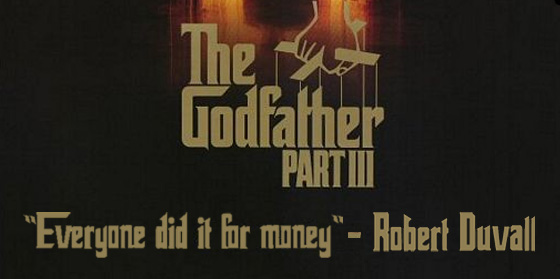
Back in 1991 Robert Duvall gave an unusually frank interview with Bob Costas, in which he revealed why he didn’t appear in The Godfather III.
After playing Tom Hagen, the Corleone’s in-house lawyer and consigliere, in the first two films he was under no illusions that the reasons Part III came about were financial.
Added to that, he was upset that Pacino was offered 5 times the amount he was going to get.
His analysis of the film is spot on:
When you see the movie, it is not as good as the first two.
…I thought the premise was very interesting …but when I did see it, …it just wasn’t as good.
…It was fifteen years later and it was like it had been done. …They did it for money.
With a prequel to John Carpenter’s The Thing in the works, a 1982 making-of documentary is a reminder of the raw terror of the original.
Although critically reviled and a box office flop when it first came out, the film still endures as one of the best sci-fi horrorsof the 1980s.
Carpenter’s direction, Rob Bottin‘s special effects make up, the ensemble performances, Dean Cundey‘s visuals and Ennio Morricone‘s chilling score are just some of the elements that combine brilliantly.
This making of video from the time depicts the gruelling shoot in British Columbia:
The negative reactions when it first opened were unfortunate, but also part of the reason why the film has endured over the years: unlike a lot of horror films, it is genuinely horrifying.
The central premise of scientists coming across an alien in the Artic was adapted from both the 1951 film The Thing from Another World, and the novella Who Goes There? by John W. Campbell, Jr. which inspired it.
But Carpenter goes much further, turning the Cold War fears of the original into something darker and more primal.
Not only is the Arctic setting claustrophobic and lonely, it plays on the paranoia of a group confronted by something they cannot comprehend.
This is also true of the audience as try to get a grip on what the Thing actually is.
Most aliens and monsters are vaguely humanoid but the Thing is such an uniquely revolting villain precisely because it is genuinely ‘other’.
As a shape-shifting parasite it is also doubly unnerving as it can be anyone at any time.
After watching it – yes, this is a spoiler warning – check out this IMDb FAQ and you will see some tantalising ambiguities in the story (my favourite being ‘Was Blair assimilated?’) which add to the mysteries on screen.
Back in 2008 Carpenter did a video introduction before a 70mm screening of the film in Bradford and described his approach to the film and why it upset people at the time.
It is rare that films flop because they are too successful at what they do, but The Thing is one of them.
One of the paradoxes of how we record and watch films in the modern era is the stack of unwatched material that gradually builds up over time.
Over the last decade, as home audiences replaced their videos with DVDs, a revolution gradually happened as the rise in online rental services (Netflix in the US and LoveFilm in the UK) and PVRs meant that audiences could timeshift their viewing.
Online DVD rentals are paid for by a monthly subscription fee, so there are no deadlines to return the discs, and with a PVR you can record plenty of films for later viewing.
But what happens when it comes to actually watching these films you have rented or stored?
Back in 2006, an article in Newsweek by Brad Stone titled Netflix Guilt articulated this modern dilemma.
Stone used an unwatched copy of City of God to make his basic point:
I had “City of God” in my possession for 11 months, during which I paid $18 a month for a three-DVD-at-a-time Netflix subscription.
Finally, I returned the movie in defeat while delusionally re-adding it to the end of my queue. By that time, my wife and I were talking about a dangerous new force in our lives: Netflix guilt.
Since 2006, the problem has accelerated with movies on iTunes, larger PVRs and faster connection speeds to deliver them to homes.
The basic issue seems to lie in the enormous choice of films and how it is much easier to select what you want.
Or, to be more accurate, what you think you want.
It is still hard for an individual to actually select something that hits their particular tastes.
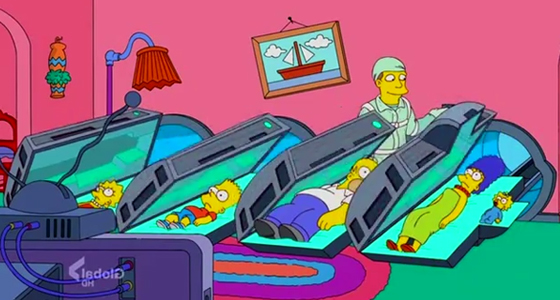
In other words, what we think we want to see, isn’t actually what we want to see, as this cartoon points out:
But it isn’t merely a case of mainstream versus art house: often mainstream films that look promising turn out to be awful and more independent fare is gripping.
Leaving aside old favourites, this means that the central problem still remains: how can we accurately select films we want to watch?
The American is a new suspense thriller about a mysterious American named Jack (George Clooney) who arrives in a small Italian town after problems with a job in Sweden.
Whilst waiting for orders, he befriends a local priest (Paolo Bonacelli) and falls for for a local prostitute named Clara (Violante Placido), whilst taking on a new assignment to construct a new rifle for a professional assassin (Thekla Reuten).
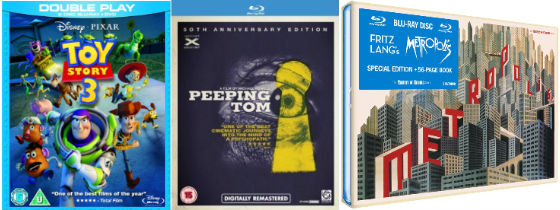
Toy Story 3 (Walt Disney Studios Home Ent.): The third film in the Toy Story series sees Andy leaving for college and donating his beloved toys – including Woody (Tom Hanks) and Buzz (Tim Allen) – to a daycare centre, where they soon realise things aren’t what they seem.
Directed by Lee Unkrich, it was a richly deserved critical and commercial triumph for Pixar, which managed maintain the high standards of the first two films and concluded the trilogy with wit, invention and technical brilliance. [Read full review] [Blu-ray / DVD]
Peeping Tom (Optimum Home Entertainment): The 1960 film about a disturbed photographer (Karl Heinz Boehm) has been digitally restored for a 50th anniversary release.
It scandalised audiences of the day and all but ended the career of director Michael Powell, but after being championed by the likes of Martin Scorsese, its reputation grew again and it is now considered one of the most important British films of its era. [Read full review] [Blu-ray / DVD]
Metropolis: Reconstructed and Restored (Eureka): Fritz Lang’s classic 1927 silent film about a sprawling, futuristic city, whose society is divided into two classes of poor workers who work underground and the rich bosses who live high above them in skyscrapers.
It has been restored in a newly reconstructed version, after 25 minutes of lost footage were found in 2008 and comes with a documentary highlighting the restoration process. [Read the full review] [Blu-ray / DVD]
ALSO OUT
Apocalypse (Kaleidoscope Home Ent.) [Blu-ray / DVD] Coco and Igor (Soda Pictures) [Blu-ray / DVD] Heartbreaker (Revolver Entertainment) [Blu-ray / DVD] Nativity! (Entertainment One) [Blu-ray / DVD] Open Season (Sony Pictures Home Ent.) [Blu-ray / DVD] Toy Story 1-3 (Walt Disney Studios Home Ent.) [Blu-ray]