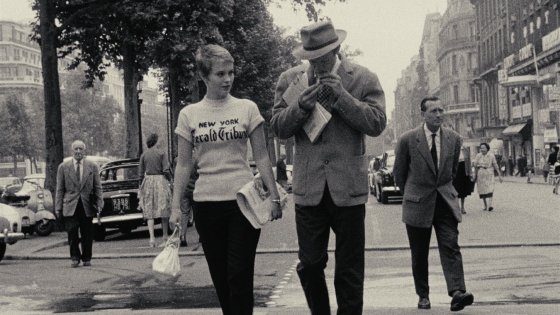
Breathless (A Bout De Souffle) is being re-released in UK cinemas to celebrate the 50th anniversary of its original release.
One of the key films of the French New Wave, it is the story of Michel Poiccard (Jean-Paul Belmondo), a small-time criminal on the run, and Patricia Franchini (Jean Seberg), an American who sells the International Herald Tribune along the boulevards of Paris.
With its loose narrative, location shooting, improvised dialogue, jump cuts, deliberately mismatched shots and literary references, it remains a landmark film.
It gave French and European cinema a much needed shot of inspiration when it first came out in 1960, with audiences and critics responding to its energy and artistic verve.
Pierre Rissient was the assistant director on Breathless and for the past fifty years has been a key figure in the film world: a critic, publicist and consultant to film festivals, he has helped champion directors as diverse as Joseph Losey, Jules Dassin, Anthony Mann, Hou Hsiao Hsien, Zhang Yimou, Clint Eastwood, Quentin Tarantino, Werner Herzog, Jane Campion and Abbas Kiarostami.
I recently spoke to Pierre about the re-release of Breathless and you can listen to the interview here:
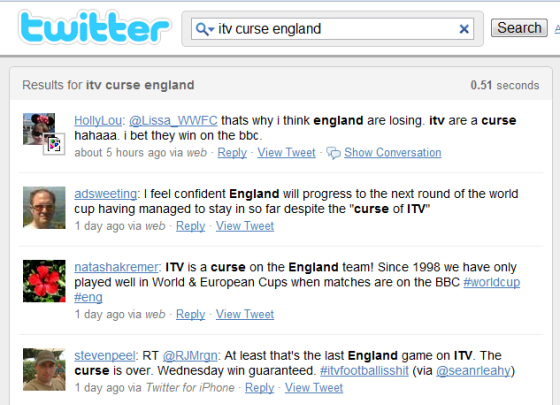
For most football fans their collective memory of a World Cup comes from the television coverage, but after two mysteriously poor displays in South Africa, some fans are asking whether ITV are cursed when it comes to screening England games.
These gaffes come after a series of highly embarrassing and costly mistakes over the past 2 years: Everton’s winning goal against Liverpool in a live FA Cup replay in 2009 was ruined by a rogue Tic-Tac advert; a high profile Nike World Cup advert was cut short during the Champions League final last month and an expensive Adidas advert was also the victim of technical problems.
On paper this is ridiculous. I’m sure Fabio Capello and previous England managers didn’t structure their team talks around which channel was showing the match.
It would seem tactics, fitness and players hitting form at the right time would play a much more important role in a team’s success at a major international football tournament.
However, given the role that chance undoubtedly plays in football, it can be a game that inspires some remarkably superstitious behaviour:
As a striker Gary Lineker never shot at goal during the warm up, whilst as a presenter he has to say “Is this for real?” before every Match of the Day.
French defender Lauren Blanc regularly kissed the bald head of goalkeeper Fabien Barthez before games at France 1998
Argentine goalkeeper Sergio Goycochea allegedly urinated before facing penalty shootouts (“It was my lucky charm …I was very subtle, nobody complained”)
England defender John Terry has confessed to having ‘around 50’ superstitions, one of which involves an Usher CD (and no, I’m not going to make any cheap Wayne Bridge gags)
At the 2006 World Cup, Noel Gallagher became a lucky mascot for Allessandro Del Piero. After the Oasis star witnessed Italy’s semi-final victory over Germany, the Italian forward forced his friend to wear exactly the same clothes for the final in Berlin. They not only won, but did so in a penalty shoot-out, which is rare for Italy.
It seems understandable that players like to relieve pre-game tension with a ritual or charm.
For fans watching on TV, who have no control over the game, superstition arguably performs a similar function in reducing stress and creating an illusion of optimism that things will somehow turn out for the best.
But how does the idea of a particular TV channel being a jinx on the England team actually stack up to the evidence?
Do England perform better at a World Cup when the game is live on the BBC? Or is this just an urban myth that has arisen around which coverage we prefer?
Looking at the historical data of which channel covered England games doesn’t really reveal any scientific truths, after all an ‘ITV jinx’ isn’t really Newtonian physics.
But it does uncover some interesting factors which may explain why such an idea has taken root.
If you look closely at every World Cup where the BBC and ITV have covered England games, certain patterns and motifs do emerge.
Below is an analysis of every tournament where the the two broadcasters have covered England, with the following ground rules:
Each broadcaster gets 3 points for an England win, 1 point for a draw and 0 points for a loss.
Games decided on penalties are treated as straight victories or defeats.
ITV didn’t exist until 1955 so the 1954 World Cup in Switzerland is not counted.
The 1962 World Cup in Chile poses a particular dilemma because satellite transmission was still in its infancy, meaning there was no live TV coverage in the UK. However, the BBC did broadcast the games on a two day delay, which in theory ITV could also have done. Therefore, the tournament is counted towards the overall score.
The current World Cup isn’t counted until it is over (which if things don’t go as planned, could be Wednesday night)
So, are ITV really cursed when it comes to England?
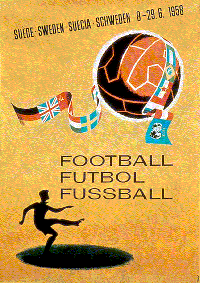
SWEDEN 1958
When it comes to live international football, the BBC had already established itself as a World Cup broadcaster at the 1954 tournament in Switzerland.
So when ITV was launched in 1955 it was already playing catch up when they covered their first tournament in Sweden during 1958.
Despite being in its infancy, the newly formed commercial network covered the same number of games as the BBC, which were the 0-0 draw with Brazil and the 1-0 defeat to the USSR.
This was also the beginning of a long trend which saw the rival broadcasters cover the same matches, something that became more common in years to come.
But perhaps at this early stage of World Cup coverage, the BBC was deemed the more authoritative voice due to the fact that they were the older broadcaster who had formed a special niche in British cultural life since their birth in the 1920s.
England’s Results
Brazil 0 England 0 / Wednesday 11 June 1958 / Nya Ullevi Stadion, Göteborg / BBC – Kenneth Wolstenholme / ITV – Peter Lloyd and Gerry Loftus
U.S.S.R. 1 England 0 / Tuesday 17 June 1958 / Nya Ullevi Stadion, Göteborg / BBC – Kenneth Wolstenholme / ITV – Peter Lloyd and Gerry Loftus
Channel Head-to-Head: BBC 1 / ITV 1
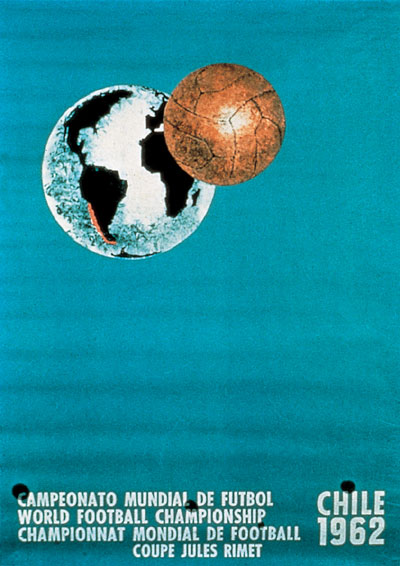
CHILE 1962
1962 in Chile presented major logistical problems for TV channels in the UK, as satellite coverage was still in its infancy and pictures couldn’t be beamed back live from South America.
BBC Radio covered England’s matches whilst the filmed footage had to be shipped back to the UK and edited before being broadcast in delay two days later.
England’s group games included a 2-1 defeat to Hungary, a 3-1 win over Argentina and 0-0 draw with Bulgaria, before ending with a 3-1 quarter-final defeat to eventual winners Brazil.
But ITV’s decision to not to cover the tournament at all gave the BBC a valuable opportunity to establish itself as the broadcaster to turn to when England were playing in a foreign tournament.
David Coleman’s spirited rant whilst introducing the infamous ‘Battle of Santiago’ between Chile and Italy was also a classic World Cup moment cementing him as a voice we forever associate with this era.
England’s Results
Hungary 2 England 1 / Thursday 31 May 1962 / Estadio El Teniente, Rancagua / BBC Delayed Coverage – Kenneth Wolstenholme
England 3 Argentina 1 / Saturday 2 June 1962 / Estadio El Teniente, Rancagua / BBC Highlights – Kenneth Wolstenholme
England 0 Bulgaria 0 / Thursday 7 June 1962 / Estadio El Teniente, Rancagua / BBC Delayed Coverage – Kenneth Wolstenholme
Brazil 3 England 1 / Sunday 10th June 1962 / Estadio Sausalito, Viña del Mar / BBC Highlights – Kenneth Wolstenholme
Channel Head-to-Head: BBC 4 / ITV 0
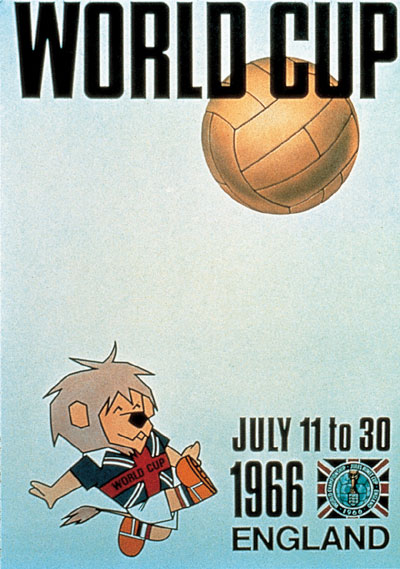
ENGLAND 1966
England’s most successful tournament was in 1966 when the nation triumphed on home soil.
From a broadcasting perspective BBC and ITV covered all the England matches live, so logic would dictate that their coverage would judged equally. But football and logic don’t always make for natural bedfellows.
Ask any England fan what they remember about the final against Germany and one famous phrase sticks out.
As Geoff Hurst blasted in England’s fourth goal in a 4-2 win, the words of BBC commentator Kenneth Wolstenholme became legendary:
If you ask fans who was commentating for ITV that day you are probably likely to get a puzzled look (it was Hugh Johns).
England’s most famous sporting triumph was indelibly associated with a BBC voice.
England’s Results
England 0 Uruguay 0 / Monday 11 July 1966 / Empire Stadium, Wembley, London / BBC – Kenneth Wolstenholme / ITV – Hugh Johns and Dave Bowen
England 2 Mexico 0 / Saturday 16 July 1966 / Empire Stadium, Wembley, London / BBC – Kenneth Wolstenholme / ITV – Hugh Johns and Dave Bowen
France 0 England 2 / Wednesday 20 July 1966 / Empire Stadium, Wembley, London / BBC – Kenneth Wolstenholme / ITV – Hugh Johns and Dave Bowen (all except first half-hour)
England 1 Argentina 0 / Saturday 23 July 1966 / Empire Stadium, Wembley, London/ BBC – Kenneth Wolstenholme and Jimmy Hill / ITV – Hugh Johns and Dave Bowen
England 2 Portugal 0 / Tuesday 26 July 1966 / Empire Stadium, Wembley, London / BBC – Kenneth Wolstenholme and Walley Barnes / ITV – Hugh Johns and Dave Bowen
England 4 West Germany 2 / Saturday 30 July 1966 / Empire Stadium, Wembley, London / BBC – Kenneth Wolstenholme and Walley Barnes / ITV – Hugh Johns and Dave Bowen
Channel Head-to-Head: BBC 16 / ITV 16
MEXICO 1970
1970 in Mexico saw the first World Cup in colour television and both broadcasters covered an equal number of matches, although they decided to split some games for the group phase.
The BBC opted to show the 1-0 win over Romania, both channels showed the 1-0 defeat against Brazil and ITV went with the final group game against Czechoslovakia, which England won 1-0.
The fateful 3-2 defeat against West Germany in the quarter-finals was on the BBC, but two interesting trends had now emerged.
It was the beginning of both channels opting to show some games exclusively and others ‘together’. But it was also a further reminder of how culturally resonant BBC commentators had become.
Ask any armchair England fans which TV voices they remember from this World Cup and they’ll probably think of David Coleman (“Pele! Jairzinho! There it is!”) and Kenneth Wolstenholme (“That was sheer, delightful football!”) waxing lyrical about the Brazilians on the BBC.
Results
England 1 Romania 0 / Tuesday 2 June 1970 / Estadio Jalisco, Guadalajara / BBC – David Coleman and Don Revie
Brazil 1 England 0 / Sunday 7 June 1970 / Estadio Jalisco, Guadalajara / BBC – David Coleman and Don Revie / ITV – Hugh Johns and Billy Wright
Czechoslovakia 0 England 1 / Thursday 11 June 1970 / Estadio Jalisco, Guadalajara / ITV – Hugh Johns and Billy Wright
West Germany 3 England 2 / Sunday 14 June 1970 / Estado de Guanajuato, León / BBC – David Coleman, Don Revie and Joe Mercer
Channel Head-to-Head: BBC 3 / ITV 3
FAILURE TO QUALIFY IN THE 1970s
That era of England winning and reaching the latter stages of a World Cup would take on an extra nostalgic glow as they failed to qualify for the tournaments in 1974 and 1978.
But in the absence of reaching those finals in Germany and Argentina, some infamous qualifying games took on a new significance.
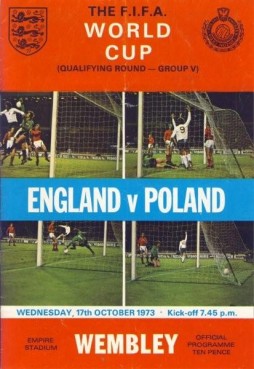
In particular, the clash with Poland at Wembley in 1973 was a horror show.
It was an iconic defeat marking the end of an era.
Alf Ramsay resigned and England were not to reach another World Cup until 1982. How could we win a World Cup if would couldn’t even reach one? England’s self image was forever tarnished.
But significantly for ITV, they covered the game exclusively live. Was the channel tainted by this disastrous result? Did England fans subconsciously link them with a painful defeat?
In the qualifiers for 1978, ITV repeated the same ‘trick’ by covering a crucial qualifier.
This time it was with group rivals Italy and although England actually won 2-0 at Wembley, they eventually failed to qualify on goal difference. Again, were ITV unfairly linked with the dark days of England’s football in the 1970s?
SPAIN 1982
When England finally did return to World Cup action in the 1982 tournament in Spain, the template for modern TV coverage was set.
The opening qualifiers alternated between the two channels, with the BBC covering England’s 3-1 over France, whilst ITV opted for the 2-0 win over Czechoslovakia and the 1-0 win over Kuwait.
The second group stage (which would see the winners progress to the semi-finals) saw the BBC cover the 0-0 draw with West Germany whilst ITV chose the 0-0 draw with Spain, which ultimately wasn’t good enough for England to progress.
Due to the nature of the group system that year (which was replaced to the present format in 1986) England somehow managed to exit the tournament despite not losing a game and only conceding 1 goal.
ITV covered more England wins in the tournament than the BBC, but had the misfortune to cover the frustrating final game, the 0-0 draw with Spain they had to win in order to progress.
Kevin Keegan missed an easy header in the dying minutes and it was symbolic of modern English frustrations at a World Cup. Good, but not good enough.
Was ITV becoming associated with England’s failure? Were they now becoming the ‘England’ of football channels?
England’s Results
England 3 France 1 / Wednesday 16 June 1982 / Estadio San Mamés, Bilbao / BBC – John Motson and Jimmy Hill
England 2 Czechoslovakia 0 / Sunday 20 June 1982 / Estadio San Mamés, Bilbao / ITV – Martin Tyler and Jack Charlton
England 1 Kuwait 0 / Friday 25 June 1982 / Estadio San Mamés, Bilbao / ITV – Martin Tyler and Jack Charlton
England 0 West Germany 0 / Tuesday 29 June 1982 / El Estadio Santiago Bernabéu, Madrid / BBC – Barry Davies and Jimmy Hill
England 0 Spain 0 / Monday 5 July 1982 / El Estadio Santiago Bernabéu, Madrid / ITV – Martin Tyler and Jack Charlton
Channel Head-to-Head: BBC 4 / ITV 7
MEXICO 1986
Mexico in 1986 was a tournament that started off disastrously in the group stages. The BBC covered the opening 1-0 defeat to Portugal, ITV broadcast the dismal 0-0 draw with Morocco and the action returned to the BBC for a crucial 3-0 win over Poland.
As the tournament entered the knockout phase, both channels covered the key England games.
This was a trend that continued up until the 1998 World Cup and the logic was fairly simple: England could go out and both channels (this being an era when there was literally only four to watch) wanted as bigger a slice of the audience as possible.
The 3-0 win over Paraguay in the Second Round was followed by the 2-1 quarter-final defeat to Argentina, in which Maradona’s infamous hand of God goal was followed by one of sublime genius.
But for this tournament, it seemed pretty even as far as the broadcasters were concerned and it seems hard to recall anyone at the time referring to ITV bringing bad luck to England.
However, there still persists a strange theory that ITV somehow jinx those games also covered by the BBC.
England’s Results
Portugal 1 England 0 / Tuesday 3 June 1986 / Estadio Tecnológico, Monterrey / BBC – John Motson and Jimmy Hill
England 0 Morocco 0 / Friday 6 June 1986 / Estadio Tecnológico, Monterrey / ITV – Martin Tyler and David Pleat
England 3 Poland 0 / Wednesday 11 June 1986 / Estadio Universitário de Nuevo León, Monterrey / BBC – Barry Davies and Jimmy Hill
England 3 Paraguay 0 / Wednesday 18 June 1986 / Estadio Azteca, Santa Úrsula, ciudad de México / BBC – John Motson and Jimmy Hill / ITV – Martin Tyler and David Pleat
Argentina 2 England 1 / Sunday 22 June 1986 / Estadio Azteca, Santa Úrsula, ciudad de México / BBC – Barry Davies and Jimmy Hill / ITV – Martin Tyler and David Pleat
Channel Head-to-Head: BBC 6 / ITV 4
ITALY 1990
With the 1990 World Cup in Italy, the two rivals fell in to the familiar pattern of alternating the group matches and simultaneously covering the knockout phase.
This tournament lives long in the memory for a generation of English football fans.
Reaching the semi-final was the best England had achieved since 1966 (and still is). The popularity of Paul Gascoigne foreshadowed the rise of the celebrity footballer.
Most significantly, a much needed optimism driven by success in the tournament helped English clubs back into European competitions after the ban following the Heysel disaster.
But after only just qualifying for the tournament with a 1-1 draw away to Poland, it is easy to forget the uproar that greeted England’s opening group game against Ireland in Cagliari.
The 1-1 draw was a dire match made worse by the long ball football favoured by the Irish under Jack Charlton. The channel that showed this infamous game? Step forward, ITV.
In contrast the BBC showed the next group clash with Holland, a much improved performance despite being a 0-0 draw, and the following 1-0 victory with Egypt.
For the knockout stages both channels opted to show England live, which covered the clashes with Belgium, Cameroon, West Germany and the 3/4th place playoff with Italy.
Most importantly, football hit a wider cultural nerve and a new generation of fans were hooked. These included the people who would pay monthly to see football on Sky and help kick start a boom which saw the creation of Premier League in 1992.
An unprecedented amount of money and overseas talent poured into the top-flight of the English game, although the long term effect on the national side was debatable.
England’s Results
England 1 Republic of Ireland 1 / Monday 11 June 1990 / Stadio Comunale Sant’Elia, Cagliari, Sardinia / ITV – Brian Moore and Ron Atkinson
Netherlands 0 England 0 / Saturday 16 June 1990 / Stadio Comunale Sant’Elia, Cagliari, Sardinia/ BBC – John Motson and Trevor Brooking
England 1 Egypt 0 / Thursday 21 June 1990 / Stadio Comunale Sant’Elia, Cagliari, Sardinia / BBC – Barry Davies and Trevor Brooking
England 1 Belgium 0 / Tuesday 26 June 1990 / Stadio Renato Dall’ Ara, Bologna / BBC – John Motson and Trevor Brooking / ITV – Brian Moore and Ron Atkinson
Cameroon 2 England 3 / Sunday 1 July 1990 / Stadio San Paolo, Fuorigrotta, Napoli / BBC – Barry Davies and Trevor Brooking / ITV – Brian Moore and Ron Atkinson
West Germany 1 England 1 [4-3 on pens] / Wednesday 4 July 1990 / Stadio delle Alpi, Torino / BBC – John Motson and Trevor Brooking / ITV – Brian Moore and Ron Atkinson
Italy 2 England 1 / Saturday 7 July 1990 Stadio San Nicola, Bari / BBC – Barry Davies and Trevor Brooking / ITV – Brian Moore and Ron Atkinson
Channel Head-to-Head: BBC 10 / ITV 7
[ad]
DO I NOT LIKE USA 1994
Interestingly, the domestic success of the Premier League in the 1990s was not reflected at international level.
After a woeful European Championships in 1992 (which saw manager Graham Taylor depicted as a turnip after losing to the Swedes) England somehow failed to qualify for the 1994 World Cup in the USA.
After a stuttering qualifying campaign that saw them lose to Norway, they faced Holland in a crucial deciding qualifier in Rotterdam in October 1993.
A 2-0 defeat effectively saw them miss out on qualification. It was the most infamous England game since 1973 and, just like that Poland match, ITV showed it exclusively live.
Although the BBC would show some poor England performances, it seemed ITV were developing an unfortunate habit for capturing the high profile stinkers.
The 1996 European championships in England, which saw the host nation nearly reach the final, was a further boost to the popularity of the game and expectation was sky high for the next World Cup.
FRANCE 1998
When England arrived in France for the 1998 tournament the modern media template was in full swing.
Pre-tournament crisis (manager Glen Hoddle dropping Paul Gascoigne from the final squad) was followed by ridiculously high expectations and massive media coverage.
Since Euro 96, each successive tournament featuring the national side seems to grow exponentially in terms of hype and it is easy to forget now (post-2002 and 2006) what a frenzy there was surrounding England’s first World Cup since Italia 90.
As far as TV coverage was concerned, there was now a regular pattern as to how the broadcasters divided up the games.
They would alternate until England reached the quarter or semi-final stage and from then on both would show the games live (how optimistic that sounds now!).
The BBC opted for the opening group game against Tunisia. Anchor Des Lynam slyly greeted the afternoon weekday audience with the line “shouldn’t you be at work?”, before England won 2-0.
ITV had opted for the second group game against Romania, presumably because the evening kick off time meant a prime time audience. Bad choice as it turned out, as England not only lost 2-1 but did so with a particularly painful stoppage time goal which came minutes after a dramatic equaliser from newcomer Michael Owen.
Needing a win against Columbia in their final group game to go through, it seemed inevitable that the BBC would cover the 2-0 win over Columbia. Failure to win the group pitted them in the tough half of the draw and they lost on penalties to Argentina after drawing 2-2 in extra time.
The game was on ITV and was for several years the largest audience in the channel’s history. But despite being a ratings success with around 25 million viewers tuning in, it is my theory that this tournament was where the notion of an ITV curse began to form.
Quite simply, there were four England games in total. When they played on the BBC, they won. When they played on ITV, they lost. As the first World Cup since Italia 90, directly following the success of Euro 96, this was a tournament firmly in the glare of modern media overload.
A consequence of these was that key defeats became associated with ITV. Unfair? Irrational? Yes, clearly it is both unless someone uncovers evidence that sinister ITV operatives somehow bribed referees and drugged England players before games.
England’s exit in this World Cup was only the second time they went out on penalties. Unfortunately for ITV, commentator Brian Moore provided a bizarre flourish to their exit.
As David Batty ran up to take the fateful penalty in the shootout Moore inexplicably asked co-commentator Kevin Keegan if he was going to score. Keegan was in an impossible situation.
If he had said no then he would be ‘blamed’ for the miss, but if Batty missed he would look stupid. Within a second it was the latter, but this bizarre ITV moment seemed to sum up England’s recent World Cup adventures: excitement, expectation and disappointment.
Another factor that may have given rise to superstitions during this period was when manager Glen Hoddle recruited a faith healer as part of the England coaching staff. Whether it had an effect on ITV’s luck is unproven.
England’s Results
England 2 Tunisia 0 / Monday 15 June 1998 / Le Stade Vélodrome, Marseille / BBC – Barry Davies and Trevor Brooking
Romania 2 England 1 / Monday 22 June 1998 / Stade Municipal, Toulouse / ITV – Brian Moore and Kevin Keegan
England 2 Colombia 0 / Friday 26 June 1998 / Stade Félix-Bollaert, Lens BBC – John Motson and Trevor Brooking
Argentina 2 England 2 [4-3 on pens] / Tuesday 30 June 1998 / Stade Geoffroy-Guichard, Saint-Étienne / ITV – Brian Moore and Kevin Keegan /
Channel Head-to-Head: BBC 6 / ITV 0
KOREA/JAPAN 2002
But by the 2002 tournament in Korea and Japan, there was a sense of déjà vu.
The rollercoaster qualifying campaign saw the resignation of Kevin Keegan, the recruitment of the first ever foreign manager (Sven Goran Eriksson), a 5-1 win away to Germany and a last-minute qualification goal against Greece.
Unluckily for ITV, the early kick off times (due to the Asian time zone) meant there was no prime time clashes, with games coming on at breakfast or lunchtime.
A particularly strange ITV moment happened when they covered the opening game of the tournament between France and Senegal. Anchor Des Lynam (a high-profile defector from the BBC) asked pundit Paul Gascoigne what he knew about the African side. Gazza simply answered: “Nothing”.
Their bad luck continued as they covered the disappointing opening 1-1 draw with Sweden, whilst the BBC broadcast the victorious 1-0 win over tournament favourites Argentina and the decisive 0-0 clash with Nigeria that saw them progress.
Possibly because the kick off times in this tournament were much earlier than ITV would have liked, they opted to screen the England’s knockout games with Denmark (3-0 win) and Brazil (a 2-1 defeat) alongside the BBC.
But when they go head to head with the BBC in these matches, ITV always get a smaller share of the audience.
Is this because audiences want uninterrupted coverage with no adverts? Better commentary? Or do some people really believe in that curse?
England’s Results
England 1 Sweden 1 / Sunday 2 June 2002 / Saitama Sutajiamu Niimarumarunii, Saitama-shi/ ITV – Clive Tyldesley and Ron Atkinson
Argentina 0 England 1 / Friday 7 June 2002 / Sapporo Dōmu, Toyohira-ku, Sapporo-shi / BBC – John Motson and Trevor Brooking
Nigeria 0 England 0 / Wednesday 12 June 2002 / Ōsaka-shi Nagai Rikujō Kyōgijō, Ōsaka-shi / BBC – John Motson and Trevor Brooking
Denmark 0 England 3 / Saturday 15 June 2002 / Niigata Sutajiamu, Niigata-shi / BBC – John Motson and Trevor Brooking / ITV – Clive Tyldesley and Ron Atkinson
England 1 Brazil 2 / Friday 21 June 2002 / Shizuoka Stadium Ecopa, Fukuroi city / BBC – John Motson and Trevor Brooking / ITV – Clive Tyldesley and Ron Atkinson
Channel Head-to-Head: BBC 7 / ITV 4
GERMANY 2006
By 2006, the tournament in Germany reached new levels of hype.
ITV were salivating at the prospect of European kick off times and huge-ratings in an era when multi-channel TV has eaten away at large single audience shares for major channels.
With the England squad featuring its supposed ‘golden generation’, the hype for the tournament was so great that one news channel even provided live coverage of England’s coach driving off to the airport.
The BBC had the uninspiring opening match with Paraguay, which saw England win 1-0.
ITV then had the misfortune to cover another World Cup clash where England were truly dire as they laboured to a 2-0 win over Trinidad and Tobago.
Things improved slightly for their coverage of the 2-2 draw with Sweden and a massive audience of 21 million tuned in.
For the knockout phase the BBC covered the tedious 1-0 win over Ecuador, whilst both channels covered the exit on penalties to Portugal after a 0-0 draw.
I find it odd to think that this was a particularly ‘cursed’ World Cup for ITV as England played just as badly on the BBC.
With Rooney coming back from injury, the two strikers only played alongside each other for 30 seconds during the entire competition.
England’s Results
England 1 Paraguay 0 / Saturday 10 June 2006 / Commerzbank-Arena, Frankfurt am Main, Hessen / BBC – John Motson and Mark Lawrenson
England 2 Trinidad and Tobago 0 / Thursday 15 June 2006 / easyCredit-Stadion, Nürnberg, Bayern/ ITV – Clive Tyldesley and Gareth Southgate
Sweden 2 England 2 / Tuesday 20 June 2006 / Rhein-Energie-Stadion, Köln, Nordrhein-Westfalen / ITV – Clive Tyldesley and Gareth Southgate /
England 1 Ecuador 0 / Sunday 25 June 2006 / Gottlieb-Daimler-Stadion, Stuttgart, Baden-Württemberg / BBC – John Motson and Mark Lawrenson
England 0 Portugal 0 [1-3 on pens] / Saturday 1 July 2006 / Veltins Arena, Gelsenkirchen, Nordrhein-Westfalen / BBC – John Motson and Mark Lawrenson / ITV – Clive Tyldesley and Gareth Southgate
Channel Head-to-Head: BBC 6 / ITV 4
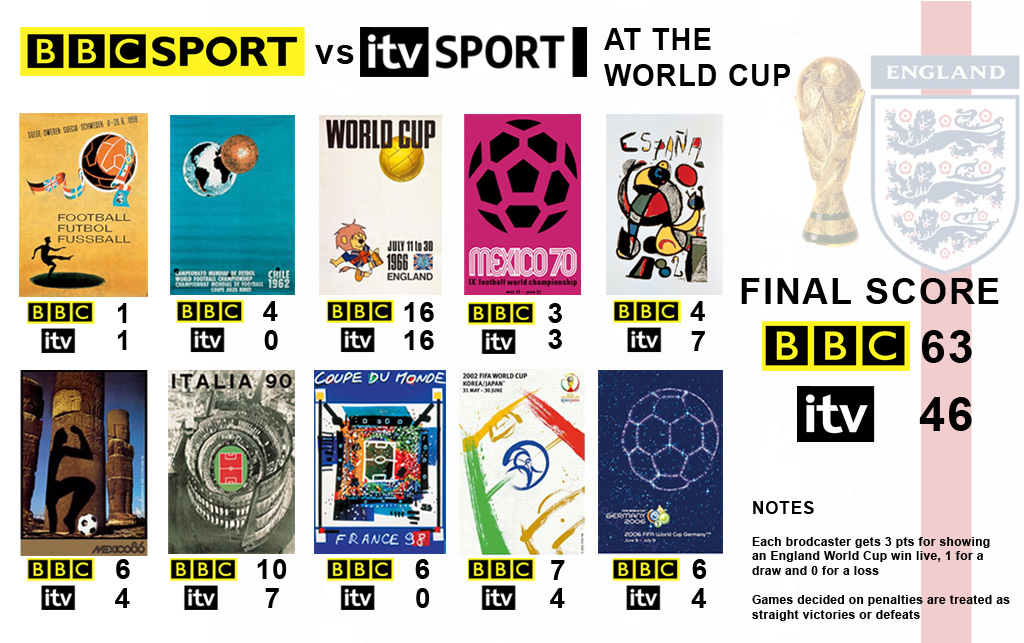
FINAL RESULT
[Click here for a larger version of the above image]
So, it would seem that England have done better at World Cups when the BBC cover the games.
Even if you discount the 1962 tournament which ITV didn’t cover, the Beeb still comes out on top.
Does this mean ITV are cursed?
I think the notion is a fairly recent one and any kind of conclusion as to why this superstition has grown needs to be placed in some kind of context.
WORLD CUP DÉJÀ VU FOR ENGLAND
The modern World Cup for England works like this. First there is the hype. Then there is some bad luck. And finally there is elimination due to a bogeyman or scapegoat, sometimes both.
The massive hype across all media usually features references to 1966 and the assertion that England are going to win the tournament, despite history and statistics suggesting otherwise.
The bad luck often features injuries to key players before or during the tournament, such as David Beckham in 2002, Wayne Rooney in 2006 and Rio Ferdinand in 2010.
There is also a likely clash with a former wartime enemy. Germany (1966, 1979, 1982 and 1990) or Argentina (1986, 1998 and 2002) often fit the bill and this year we have already had USA playing the role.
For good measure, the eventual elimination on penalties is usually blamed on a scapegoat. This can be a dodgy referee, a hapless player or a cheat.
ITV have been caught up in this modern madness that surrounds England at World Cups.
Although it represents the rare commercial opportunity of guaranteed ratings (especially if England do well), we also shouldn’t underestimate one of the main reasons the British public love the BBC: the lack of adverts.
The commercial nature of ITV also means its coverage of a tournament is filled with hype and over-optimism, which possibly feels worse when England go out.
Added to this are some truly infamous qualifying defeats (Poland in 1973 and Holland in 1993) broadcast exclusively live on ITV.
Most people probably have forgotten this, but it may linger in the collective subconscious of England fans and provides ammunition for irrational thinking.
The years when they covered the Premier League (2001-2004) also loom large when a failed 7pm timeslot and ill-advised touches such as the ‘tactics truck’ made BBC’s Match of the Day seem the proper home for football highlights. Ron Atkinson’s racist outburst against Marcel Desailly after a Champions League tie in 2003 further tarnished the channel’s image.
On top of this, there is the logic that our national broadcaster should cover our national team. The fact that BBC always beat ITV by a large margin in the ratings when they both show England games would seem to suggest this, as there isn’t much to separate them on a purely technical level.
The BBC are in an interesting position: if England go through after playing Slovenia on Wednesday (the full permutations are here), then the myth will grow that they are England’s lucky channel, even though England haven’t yet lost on ITV in this World Cup.
Is this all fair? No, clearly it isn’t. Like certain aspects of football, the perception that ITV’s coverage is a jinx on the England team is riddled with illogical thinking and superstition. But football is a superstitious game.
Why blame our grass roots infrastructure, our delusions of grandeur, our short-term strategies for the national team and our underperforming players when we can simply say that ITV brings us bad luck?
* UPDATE 20/06/10*
SOUTH AFRICA 2010
Since originally posting this, England’s campaign in South Africa has ended after a disastrous 4-1 defeat to Germany in the Second Round.
On reflection, the tournament fitted the usual pattern of excessive hype followed by massive deflation.
But what made the end of this campaign interesting was that there was no easy scapegoat, as the manner and scale of the defeat was so crushing.
Obviously the main villain would appear to be Uruguayan referee Jorge Larrionda and his assistants Mauricio Espinosa and Pablo Fandino, as even FIFA have since apologised for the now infamous decision.
However, this was England’s worst ever defeat at a World Cup and the woeful manner in which England were outfought and outclassed has seen blame spread amongst various scapegoats: manager Fabio Capello, the squad, the FA, the Premier League and even the footballing culture in England.
But how did ITV fare against the BBC? Like 1998, England only played four games and they were split evenly amongst the two broadcasters.
The first two games were on ITV and they were unlucky enough to capture two poor performances (the Algeria one was a particular stinker), whilst the BBC screened the crucial win against Slovenia.
Although both channels will be disappointed at England’s exit, ITV may be secretly relieved that the German defeat was screened exclusively on BBC.
The ‘curse of ITV’ would have gone into overdrive if the commercial channel had screened the match.
But my guess is that this superstition will still be around the next time England play in an international tournament.
Why? A superstition is easier to understand than the very deep problems that afflict England at international level.
England’s Results
England 1 USA 1 / Saturday 12 June 2010 / Royal Bafokeng Stadium, Rustenburg / ITV – Clive Tyldesley and Andy Townsend
England 0 Algeria 0 / Friday 18 June 2010 / Green Point Stadium, Cape TownITV – Clive Tyldesley and Andy Townsend
Slovenia 0 England 1 / Wednesday 23 June 2010 / Nelson Mandela Bay Stadium, Port Elizabeth / BBC – Guy Mowbray and Mark Lawrenson
Germany 4 England 1 / Sunday 27 June 2010 – / Free State Stadium, Manguang/Bloemfontein / BBC – Guy Mowbray and Mark Lawrenson
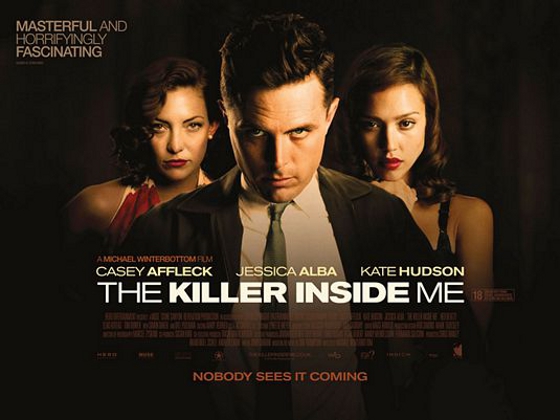
The Killer Inside Me is an interesting adaptation of Jim Thompson‘s dark 1952 novel, although like a lot of films tagged as ‘controversial’ is neither as accomplished or shocking as its reputation might suggest.
Set in a small Texas town, it is the story of a deputy sheriff (Casey Affleck) who is a closet sociopath, covering up his corrupt ways with increasingly cunning and desperate actions.
Among the people who cross his path are a local prostitute (Jessica Alba), his schoolteacher girlfriend (Kate Hudson), the Sheriff (Tom Bower), a local businessman (Ned Beatty), a local union leader (Elias Koteas), the suspicious county attorney (Simon Baker) and a grizzled lawyer (Bill Pullman).
Only the second film he’s made set in America, it is a reasonably compelling portrait of Thompson’s literary vision.
John Curran‘s script captures the action and tone of the novel in an efficient manner, using for voiceover to clever effect by drawing us closer to the central character.
The production design and period detail paint a convincingly grimy portrait of small town 50s America, where corruption and dark deeds simmer beneath the surface of a society about to undergo major convulsions.
Unusually for this material, Winterbottom and regular cinematographer Marcel Zyskind have opted for a fairly bright visual palatte, which gives the action a strange and arresting quality in contrast with the shadows and dutch angles reminiscent of classic film noir.
Given that his character dominates the film, much hinges on the performance of Affleck in the lead role, and he is memorably creepy, managing to convey the pathological thinking and sinister charm of someone in a dangerous position of authority.
There are eerie similarities with his role in The Assassination of Jesse James by the Coward Robert Ford (both characters even share the name Ford) and he is fast becoming one of the most interesting actors currently working in Hollywood.
The other performances aren’t quite on the same level, although Beatty and Pullman fit their roles very nicely, and it is a shame that Alba and Hudson feel miscast in their roles, despite containing some of their best work in quite some time.
Overall, it is an impressive adaptation with some fine acting but there is something missing in how the film moves along. At times the languid pacing and mumbling dialogue become distracting, especially when a lot of narrative threads are being weaved and eventually tied up.
This is apparent in the disappointing climax, which not only stretches credibility but is also a little overcooked in terms of the visuals and action.
Given the controversy surrounding this film at Sundance and on its recent UK release, you might be forgiven for thinking that this is one of the most violent films in recent memory.
There are two disturbing sequences (one of which is particularly brutal), but by modern standards of they don’t really compare with the violence in films like Irreversible (2002), Switchblade Romance (2003), Hostel (2006), or the Saw sequels.
But is the shocking nature of the acts on screen dictated solely by gender? Is violence somehow less shocking if done to a man? A child? An animal?
In the context of the film, surely the sequence raising most hackles is there to accurately depict the emotional and physical destruction wrought by violence? It is hard to watch, but then it is meant to be.
Some critics have labelled Winterbottom and the film as ‘misogynist‘ because the male characters don’t suffer as much as the females. This is perverse logic. Do we need quotas on how many male and female characters suffer on screen?
When it comes to the climactic scene, another sequence that has caused anger, a certain character’s actions are sadly plausible and, in any case, surely the aim of these scenes was to render Thompson’s material faithfully?
Cinema is a medium with a unique directness and throughout its history many films have pushed the social boundaries with The Wild Bunch (1969), Straw Dogs (1971), A Clockwork Orange (1971) and Reservoir Dogs (1992) all attracting controversy for the way in which they depicted violence.
But I doubt if The Killer Inside Me will actually be remembered alongside these landmark controversies.
It is an accomplished adaptation, not without its flaws, and when future audiences stop to consider the film, they will have the benefit of doing so without the reductive shrieking from the media sidelines.
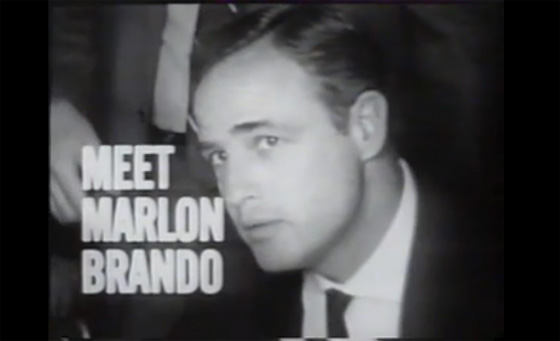
This footage of Marlon Brando doing a press junket in 1965 is hilarious.
It took place at Hampshire House in New York and features him talking to a variety of journalists about Morituri, a World War II film which also starred Yul Brynner, Janet Margolin and Trevor Howard.
As the voiceover says at the beginning, the reporters ask predictable questions but he gives few predictable answers.
My guess is that he was was deeply fed up with the process but decided to have a few drinks and enjoy talking about anything but the film.
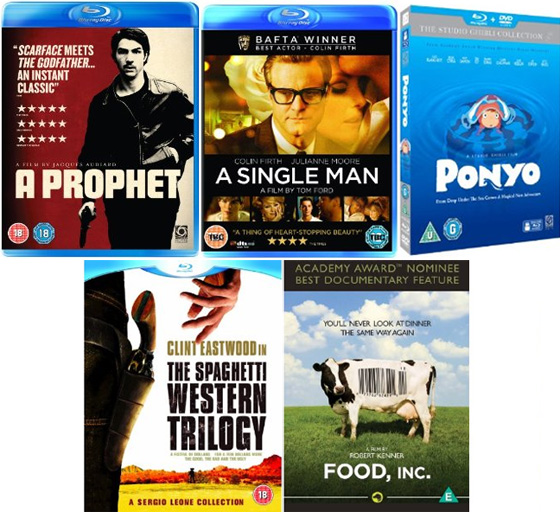
A Prophet (Optimum Home Entertainment): One of the standout films of last year was this scintillating prison drama about a lowly Arab criminal named Malik (Tahar Rahim) who is drawn into the inner circle of a Corsican mafia group, led by the ruthless César Luciani (Niels Arestrup). After a tough initiation, Malik learns how to read and write, and starts to learn how power works inside and outside the prison.
Directed by Jacques Audiard, it features two outstanding lead performances from Rahim and Arestrup, and quickly established itself as an instant classic, scooping the Grand Prix at Cannes and topping many critic’s end of year polls. Audiard doesn’t shy away from the dark brutalities of prison life, but manages to construct a compelling portrait of how criminal empires are born. An absolute must see. [Blu-ray / DVD]
A Single Man (Icon Home Entertainment): Adapted from Christopher Isherwood’s 1964 novel, it explores a day in the life of a grieving English college professor (Colin Firth) during the early 1960s. A highly impressive directorial debut for fashion designer Tom Ford, it co-stars Julianne Moore, Matthew Goode and Nicholas Hoult.
The stand out element here is a wonderfully nuanced performance from Firth, who was desrvedly nominated for an Oscar, along with some excellent production and costume design. Regrettably, Ford and co-screenwriter David Scearce tinker too much with the source novel (making one major alteration) but there is still much to admire here, not least the fact that Ford largely funded the project himself, which is highly unusual even for the richest filmmakers in Hollywood. [Blu-ray / DVD]
Ponyo (Optimum Home Entertainment): The latest animated film from renowned director Hayao Miyazaki is a story of friendship between a five-year-old boy and a goldfish princess who wants to be human.
Featuring the voices of Matt Damon, Liam Neeson, Cate Blanchett and Tina Fey it loosely adapts Hans Christian Anderson’s The Little Mermaid into a contemporary Japanese setting. Although not quite up to the standards of his finest work, this is still a delight. Stylistically, it is something of a departure with more sparse compositions but the positive vibes, reflected in the bright pastel colors and energy of the film make it a highly pleasurable introduction to Miyazaki’s work for newcomers. [Blu-ray + DVD]
Extras include:
Storyboards
The Five Genuises Who Created Ponyo – interviews
Japanese trailers and TV spots
Intro by Kathleen Kennedy and Frank Marshall (3:19)
A Conversation with Hayao Miyazaki and John Lasseter (3:30)
Behind the Microphone: the Voices of Ponyo (6:01)
Creating Ponyo (3:55)
Ponyo and Fujimoto(2:56)
The Nursery (1:57)
Scoring Miyazaki (7:17)
The Producer’s Perspective: Telling the Story (2:25)
The Locations in Ponyo (9:39)
Hayao Miyazaki interview (14.00)
Toshio Suzuki interview (29:00)
Dubbing Session and interview with Japanese cast 25:00)
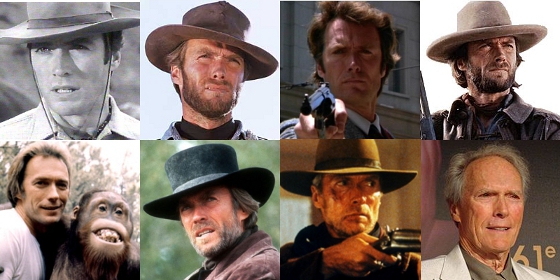
There has been a lot of debate about the transfer of these classic westerns to Blu-ray – with HD enthusiasts less than happy with the finished result – but the films are enduring enough to make a purchase worthwhile. The plentiful extras from the DVD versions are included with contributions from film historian Christopher Frayling and commentaries on all three films. The featurettes include Clint Eastwood looking back on the making of the trilogy, location comparisons and two solid pieces on Leone himself. [Blu-ray / DVD]
Food Inc. (Dogwoof): A disturbing but enlightening documentary from director Robert Kenner which explores the dark side of America’s food industry and the way in which deregulation has affected what people eat.
Featuring many eye opening sequences featuring chickens, pork chops, soybean seeds, and even tomatoes that won’t go bad, there is a lot here to chew on, both figuratively and literally. Featuring interviews with Eric Schlosser (author of Fast Food Nation) and progressive social entrepreneurs like it is a compelling tale of how food gets to US tables. [DVD]
ALSO OUT
Absolute Power (Warner Home Video) Bad Boys (Sony Pictures Home Ent.) Brothers (Lionsgate UK) Chris Ryan’s Strike Back (2 Entertain) Doctor Who – The New Series: 5 – Volume 1 (2 Entertain) Exam (Sony Pictures Home Ent.) Heartbreak Ridge (Warner Home Video) Home (Universal Pictures) Kelly’s Heroes (Warner Home Video) Pacific – The True Stories (Revolver Entertainment) RoboGeisha (Showbox Media Group) The Rookie (Warner Home Video) The Story of Science (2 Entertain) The Wolfman (Universal Pictures) Tora! Tora! Tora! (20th Century Fox Home Ent.) Where Eagles Dare (Warner Home Video)
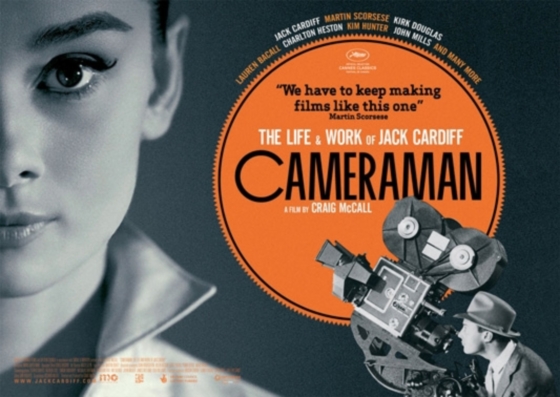
With a career that spanned the development of cinema, taking in silent film and the advent of Technicolor he worked with luminaries such as Michael Powell, John Huston, Alfred Hitchcock, Marilyn Monroe, John Wayne, Humphrey Bogart and Audrey Hepburn.
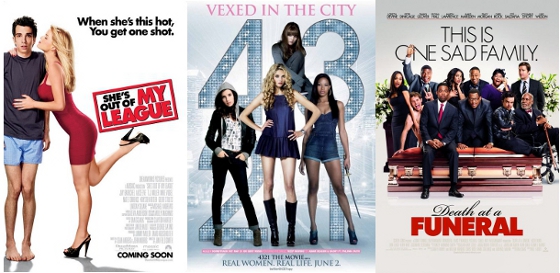
She’s Out Of My League (Paramount): A romantic comedy about a dweeby airport worker (Jay Baruchel) who forms an unlikely relationship with a glamourous event organiser (Alice Eve).
Mixed reviews and box office in the US might mean limited box office prospects for this comedy, which is being released in a period where the big studios are doing their best to avoid the World Cup. [Vue West End, Nationwide / 15]
4.3.2.1 (The Works): Writer, director and actor Noel Clarke tries to broaden his appeal from the Kidulthood films with this heist tale set in the US and UK.
Starring Clarke, Emma Roberts, Tamsin Egerton, Mandy Patinkin and Kevin Smith (as himself), it could tap into the audiences that made Kidulthood and Adulthood successes here in the UK. [Odeon West End & Nationwide / 15]
Death At A Funeral (Sony Pictures): The US remake of the 2007 British comedy about a day in the life of an American family as they gather for a funeral.
Directed by Neil LaBute and featuring an ensemble cast including Chris Rock, Martin Lawrence, Zoe Saldana, James Marsden, Danny Glover and Luke Wilson. The mixed reviews and the fact that this is being release in the pre-World Cup dead zone suggests that problems may be afoot. [Nationwide / 15]
ALSO OUT
The Killer Inside Me (Icon): Adapated from Jim Thompson’s 1952 novel about a deputy sheriff (Casey Affleck) in Texas, who is secretly a depraved sociopath, which has severe consequences for the people in his private life.
Directed by Michael Winterbottom and co-starring Jessica Alba and Kate Hudson, the film arrives on a wave of controversy due to the graphic violence towards women that has upset audiences at Sundance, Berlin and various critics. Icon will be glad it has got so much publicity here in the UK, although the tough material may put off art-house audiences. [Cineworld Haymarket, Curzon Soho, Odeon Covent Gdn. & Nationwide / 18]
The Brothers Bloom (Optimum Releasing): Despite screening at festivals in 2008, this quirky comedy caper is about two con-artist brothers (Mark Ruffalo and Adrien Brody) who try to rob a rich heiress (Rachel Weisz). Directed by Rian Johnson (who made Brich in 2005), it is a disappointing film given the talent involved and its box office prospects seem reduced from the poor buzz and reviews. [Curzon Soho & Nationwide / 12A]
Bear (Metrodome Distribution): A thriller about a grizzly bear spoiling a holiday trip into the woods. Directed by John Rebel, it stars Katie Lowes and Patrick Scott Lewis.
Girl On The Train (Soda Pictures): A French drama about a young woman who claims she was the target of an anti-Semetic attack, causing a media sensation. Directed by Andre Techine, it stars Emilie Dequenne. [Key Cities]
Kicks (New Wave Films): A British film about an introverted Liverpudlian teenager (Kerrie Hayes) and an aspirant WAG (Nichola Burley) who bond over a footballer they love. [Odeon Covent Garden & Key Cities / 15]
Shrink (Lionsgate UK): A US indie drama about a shrink (Kevin Spacey) who treats members of the entertainment industry in Hollywood. Directed by Jonas Pate, from a script by Thomas Moffett. [Apollo Piccadilly Circus / 15]
Videocracy (Dogwoof): Documentary about the Italian Prime Minister Silvio Berlusconi and his effect on his country’s media and democracy. [Odeon Panton Street & Key Cities]
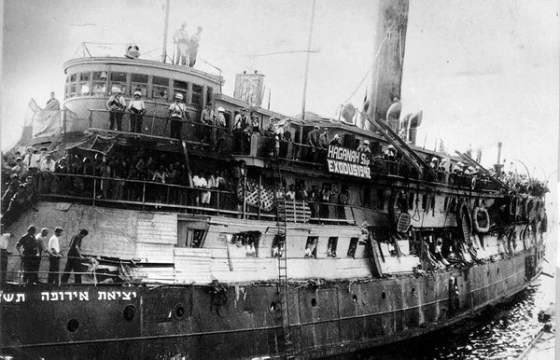
On his BBC blog director Adam Curtis has posted a fascinating documentary called People of the Exodus.
Made in 1973, it tells the story of a Jewish refugee ship named the Exodus which tried to break the British blockade of Palestine in 1947.
Featuring interviews from both sides, it has many striking parallels with recent events off the coast of Israel: a blockade; soldiers boarding the ship; deaths on board and international outrage.
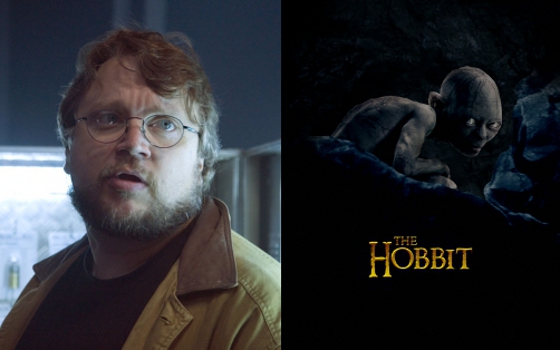
After numerous delays to the upcoming film of The Hobbit, director Guillermo del Toro has confirmed that he is departing the project.
In a nutshell, the ongoing financial problems at MGM – who share the rights with New Line/Warner Bros. – meant that the delays had become overwhelming and were preventing him from making other films.
He made the official announcement through the long-running Lord of the Rings fansite The One Ring:
In light of ongoing delays in the setting of a start date for filming “The Hobbit,” I am faced with the hardest decision of my life. After nearly two years of living, breathing and designing a world as rich as Tolkien’s Middle Earth, I must, with great regret, take leave from helming these wonderful pictures.
I remain grateful to Peter, Fran and Philippa Boyens, New Line and Warner Brothers and to all my crew in New Zealand. I’ve been privileged to work in one of the greatest countries on earth with some of the best people ever in our craft and my life will be forever changed.
The blessings have been plenty, but the mounting pressures of conflicting schedules have overwhelmed the time slot originally allocated for the project. Both as a co-writer and as a director, I wish the production nothing but the very best of luck and I will be first in line to see the finished product. I remain an ally to it and its makers, present and future, and fully support a smooth transition to a new director.
We feel very sad to see Guillermo leave the Hobbit, but he has kept us fully in the loop and we understand how the protracted development time on these two films, due to reasons beyond anyone’s control – has compromised his commitment to other long term projects…
The bottom line is that Guillermo just didn’t feel he could commit six years to living in New Zealand, exclusively making these films, when his original commitment was for three years. Guillermo is one of the most remarkable creative spirits I’ve ever encountered and it has been a complete joy working with him.
Guillermo’s strong vision is engrained [sic] into the scripts and designs of these two films, which are extremely fortunate to be blessed with his creative DNA. Guillermo is co-writing the Hobbit screenplays with Philippa Boyens, Fran Walsh and myself, and happily our writing partnership will continue for several more months, until the scripts are fine tuned and polished…
New Line and Warner Bros will sit down with us this week, to ensure a smooth and uneventful transition, as we secure a new director for the Hobbit. We do not anticipate any delay or disruption to ongoing pre-production work.
Back in 2008 I spoke with Del Toro and he seemed thrilled about tackling the project. You can listen to the interview here.
With MGM’s financial situation delaying this project as well as the latest Bond film, it would seem imperative that they get them sorted out as soon as possible.
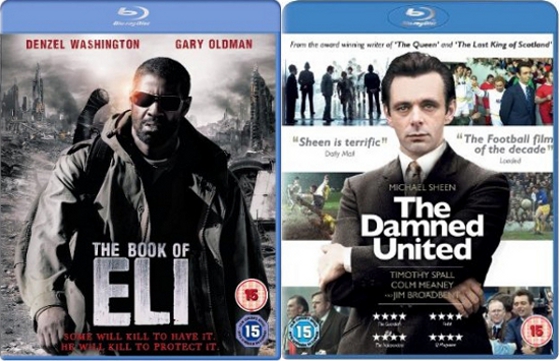
The Book of Eli (EV): Set in a post-apocalyptic America, this action-drama is about an enigmatic traveller named Eli (Denzel Washington) on a mysterious journey towards the west coast involving a valuable book. Along the way he comes across marauding bandits, a town ruled by the villainous Carnegie (Gary Oldman), and a young woman who he befriends (Mila Kunis).
Although The Hughes Brothers haven’t made a film since From Hell (2001), they manage to craft an entertaining and well-paced film with a satisfying twist. Although it owes a lot to other films in this genre (notably Mad Max 2) there are some nice ideas sprinkled in amongst the well-staged action sequences. Shot on the high-definition Red One camera, the visual look of the film is striking due to the heavy use of filters and the Blu-ray transfer is satisfyingly smooth. [Blu-ray / DVD]
The extras include the following featurettes:
A Lost Tale: Billy
Behind The Story
Deleted / Alternate Scenes
The Book of Eli Soundtrack
BD Exclusive: Picture-in-Picture Feature : Behind the Scenes and Interviews
The Damned United (Sony Pictures Home Ent.): This biopic of legendary English football manager Brian Clough was adapted from David Peace’s bestselling novel about his turbulent spell in charge of Leeds United during the 1970s. Starring Michael Sheen as Clough, Timothy Spall as Peter Taylor, Colm Meaney as Don Revie and Jim Broadbent as Sam Longson, it was adapted by Peter Morgan (The Queen, Frost/Nixon) and directed Tom Hooper (Longford, John Adams).
Although the light-hearted tone tends to gloss over the riveting, dark tone of Peace’s book, the film is powered by several fine performances, with Sheen and Spall on top form. The production design impressively evokes the atmosphere of the 1970s, and the Blu-ray transfer is excellent with an impressively detailed image. [Blu-ray / DVD]
The extras for the Blu-ray include:
1080P 1.85:1 Widescreen
English 5.1 Dolby TrueHD
English Audio Description Track
English, English HOH and Hindi subtitles
Commentary with Director Tom Hooper, Michael Sheen and Producer Andy Harries
Deleted Scenes with Optional Director’s Commentary
Cloughisms with Optional Director’s Commentary
Perfect Pitch: The Making Of The Damned United
Remembering Brian
The Changing Game: Football in the Seventies
Creating Clough: Michael Sheen Takes on ‘Old Big ‘Ead’
Alice in Wonderland (Disney) [Blu-ray + DVD] Armored (Sony Pictures Home Ent.) [Blu-ray / DVD] Astro Boy (E1 Entertainment UK) [Blu-ray + DVD] Bodyguards and Assassins (E1 Entertainment UK) [Blu-ray + DVD] Daybreakers (Lionsgate UK) [Blu-ray / DVD] La Boheme: Royal Opera House (Opus Arte) [DVD] One Night in Turin (Kaleidoscope Home Ent.) [Blu-ray / DVD] Romantic City: Venice [Blu-ray] Salome: Royal Opera House [Blu-ray] The Sky Crawlers (Manga Entertainment) [Blu-ray / DVD] Winter in Wartime (Kaleidoscope Home Ent.) [Blu-ray / DVD]
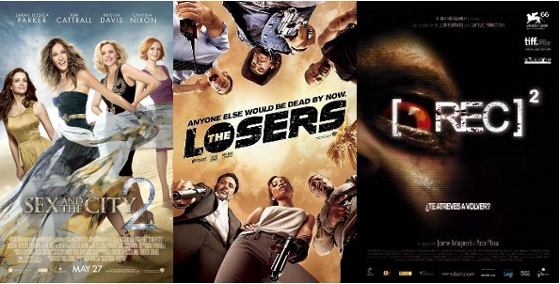
Sex and the City 2 (Warner Bros.): The sequel to the 2008 film, which was based on the HBO series of the same name, sees Carrie (Sarah Jessica Parker), Samantha (Kim Cattrall), Charlotte (Kristin Davis) and Miranda (Cynthia Nixon) cope with more relationship problems and jet off to Abu Dhabi.
Directed by Michael Patrick King, the early reviews on this have been brutal, although that probably won’t stop female audiences flocking to see this. [Vue West End & Nationwide / 15]
The Losers (Optimum Releasing): The first of the guys-on-a-mission movies to be released this summer (the others being The A-Team and The Expendables) is an adaptation of the Vertigo comic book series about members of US Special Forces team (Jeffrey Dean Morgan, Chris Evans and Idris Elba) who are double crossed on a mission in Bolivia and seek vengeance with the help of a mysterious woman (Zoe Saldana).
Directed Sylvain White, it got mixed reviews and luke-warm box office when it opened in the US last month although over here it might attract male audiences who don’t want to be dragged along to see Sex and the City 2. [Cineworld Wandsworth, Clapham Picturehouse & Nationwide / 12A]
[Rec] 2 (E1 Entertainment): The sequel to the 2007 Spanish horror film takes place immediately after the events of the first film, with producing company Filmax International describing it as having “the same claustrophobic concept” as REC but with “new means of transferring fear from the screen to the spectator through the recording lens. So in other words it is the Blair Witch in Barcelona all over again, with some ridiculous typography going on in the title.
Written and directed by Jaume Balagueró and Paco Plaza, it stars Jonathan Mellor and Manuela Velasco. Discerning horror fans might turn up for this one, given that the original directors are back, but the endless torrent of horror remakes and sequels over the last few years could prove a turn off. [Cineworld Shaftesbury Ave., Empire Leicester Square & Nationwide / 18]
Space Chimps 2 (3D) (Entertainment): The sequel to the 2008 animated film about chimps in space (the title is pretty self-explanatory) follows Comet, the chimp form the first film, who travels to Planet Malgor and also has to deal with the feared alien ruler Zartog who takes over Mission Control.
Animated by Vanguard Animation, who were behind films such as Valiant (2005) and Happily N’Ever After (2007), the first film did decent box office and the fact that this is in 3D may boost its box office here. [Empire Leicester Square & Nationwide]
Tooth Fairy (20th Century Fox): A comedy about a cocky minor league hockey player nicknamed “The Tooth Fairy” (Dwayne Johnson) who is turned into a real one and is ordered to see the head fairy (Julie Andrews) and do good deeds.
Directed by Michael Lembeck, it co-stars Ashley Judd and Stephen Merchant. Judging from the US reviews, it is unlikely to be deemed a modern classic. [Empire Leicester Square & Nationwide / 12A]
ALSO OUT
[ad]
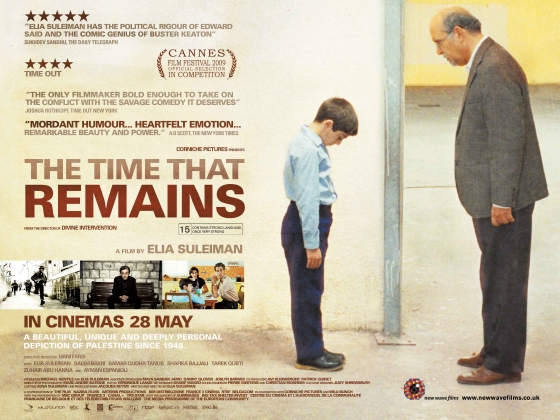
The Time That Remains (New Wave Films): A semi-biographical black comedy written, directed and starring Elia Suleiman, this explores the creation of the Israeli state from 1948 to the present. Co-starring Saleh Bakri, Leila Mouammar, and Bilal Zidani it was at Cannes last year and is the third film – after Chronicle of a Disappearance and Divine Intervention – in a trilogy charting the story of Palestinian dispossession and displacement over the past 60 years. [Selected Cinemas / 15]
The Happiest Girl In The World (Soda Pictures): A drama about a young Romanian girl who wins a car in a competition and goes with her parents to collect it in Bucharest. Directed by Radu Jude, it stars Andreea Bosneag and Doru Catanesou. [BFI Southbank & selected Key Cities / 15]
Kites: The Remix (Reliance Big Entertainment): An English language ‘remix’ of a Bollywood film, produced and edited by director Brett Ratner. Shorter than the Hindi version by about 40 minutes this one is hoping to be a crossover hit with English language audiences. [Nationwide / 12A]
Fish Story (Third Window): A Japanese anime/action/horror/comedy/drama hybrid about a mysterious punk song performed in the 1970s which has a ‘profound effect on the future’. Directed by Yoshihiro Nakamura, it stars Vincent Giry, Gaku Hamada. [ICA Cinema]
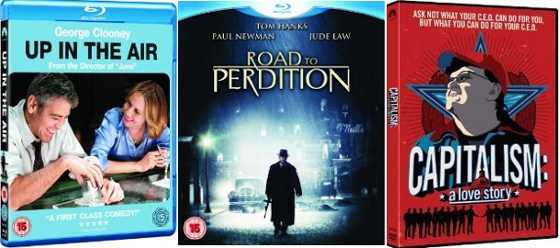
Up In The Air (Paramount): One of the most acclaimed films of last year was this comedy-drama about a man (George Clooney) who specialises in firing workers in a smooth and efficient manner because managers have outsourced this difficult process. Addicted to travel, air miles and an open relationship with a fellow traveller (Vera Farmiga), he is alarmed when his boss (Jason Bateman) makes him train a new recruit (Anna Kendrick) who advocates firing people via video-link.
Directed by Jason Reitman, it manages to combine breezy, observational comedy with more serious themes of work and finding love. The script even updates the themes of the book to the current era (one sequence is dated as happening in February 2010) by having recently fired workers essentially play versions of themselves.
Clooney is perfectly cast in the lead role and the supporting cast is generally excellent with Farmiga, Kendrick and Batemen contributing fine work. The technical aspects of the film are first rate across the board; with Dana Glaubetman’s editing worthy of special mention as it helps keep proceedings ticking along beautifully. Compared to Reitman’s previous films, it has the delicious wit of Thank You for Smoking and the unsentimental emotions of Juno, but actually surpasses both in terms of mixing up the light and heavy elements.
The HD transfer is of the high standard you might expect from a contemporary Hollywood studio and although this isn’t the kind of film that is a banquet for the eyes, the Blu-ray looks wonderfully clean and sharp. [Buy it on DVD or Blu-ray]
The special features include the following extras, which are all in high definition:
Commentary by writer/director Jason Reitman, director of photography Eric Steelberg and first assistant director Jason Blumenfield
Shadowplay: Before The Story
Deleted Scenes with Optional Commentary by Jason Reitman:
To Know Me is To Fly With Me
Real People Firing and Irate Employee
Thumper and Extended Boat Scene
Omaha Montage
Spacesuit
Do You Live At The Hilton?
Nosey Neighbour
Natalie In Restroom
Natalie Vid-Chats
Angry Ryan Checks In
Goalquest Invite
Maynard Finch Commercial/Kara Calls Ryan
Barely Squeaking By / Natalie Calls
Trailers
“Help Yourself” music video by Sad Brad Smith
Storyboards
American Airlines Prank
Road to Perdition (20th Century Fox Home Ent.): Sam Mendes made a big splash with American Beauty, his feature film debut which scooped several Oscars in 1999, and his eagerly anticipated follow up in 2002 was this Depression-era crime drama about a hitman (Tom Hanks) who is forced to go on the run with his son (Tyler Hoechlin) after the rest of his family are killed by the wayward son (Daniel Craig) of a mobster (Paul Newman).
Although this wasn’t as well received as his debut film, the technical aspects are excellent with the late Conrad Hall winning a richly deserved Oscar for his cinematography. DreamWorks made the bizarre decision to open it right in the middle of the summer season, meaning its Oscar chances were considerably reduced, but it still stands up well compared to the other films that won that year. [Buy it on Blu-ray]
The extras are as follows:
Sam Mendes Feature Introduction (HD)
A Cinematic Life: The Art & Influence of Conrad Hall (HD)
The Library: A Further Exploration of the World of Road To Perdition
Previously released bonus material is presented in standard definition, except as noted:
Commentary by director Sam Mendes
Deleted Scenes (with optional commentary by Sam Mendes)
The Making of Road To Perdition
Capitalism – A Love Story (Paramount Home Entertainment): from Michael Moore examines the effect of corporate dominance on the everyday lives of Americans, especially in the light of the recent global economic meltdown. Although the buzz on this film was mixed when it premiered at Venice and Toronto back in the Autumn, it is a more thoughtful film than some critics have given it credit for. The title is misleading as it’s more of a critique against the winner-takes-all capitalism ushered in by the Reagan administration and how the policies under Clinton and Bush have contributed to the current financial crisis.
There are some sequences that drag a little, but for the most part it is a thought provoking examination of how we’ve got to where we are as a society. Strangely, it could actually win Moore audiences amongst the right-wing Teabaggers as well as his core liberal audience, as his criticisms of the TARP scheme chime in with theirs. [Buy it on DVD]
The extras on the DVD feature a lot of material that didn’t make the theatrical cut, including:
Sorry, House-Flippers and Banks: You’re Toast In Flint, MI
Congressman Cummings Dares to Speak the Unspeakable
NY Times Pulitzer Prize Winner Chris Hedges on the Killing Machine Known as Capitalism
The Rich Don’t Go to Heaven (There’s a Special Place Reserved for Them!)
What if, Just if, We Had Listened to Jimmy Carter in 1979?
The Omnivore’s Dilemma? It’s Capitalism
Commie Taxi Drivers: “You Talkin’ To Me?”, in Wisconsin
How to Run the Place Where You Work
The Socialist Bank of… North Dakota?
The Bank Kicks Them Out, Max Kicks Them Back In
ALSO OUT
St. Trinians 2 – The Legend Of Fritton’s Gold (EIV) [DVD / Blu-ray] Did You Hear About The Morgans? (Sony Pictures Home Ent.) [DVD / Blu-ray] Precious (Lionsgate) [DVD / Blu-ray] Armageddon (Walt Disney Studios Home Entertainment) [Blu-ray] City of the Living Dead (Arrow) [DVD / Blu-ray] Anesthetize (KSCOPE) [DVD + Blu-ray] Heartless (Lionsgate) [DVD / Blu-ray] S.N.U.B (Isis) [DVD]
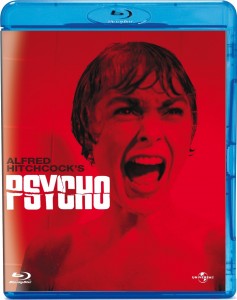
Universal have announced a “meticulously restored” version of Psychoto be released on Blu-ray this August.
It will be the second major Hitchcock film to get a high-definition release – after Warner Bros’ splendid North By Northwest Blu-ray – this will be a 50th Anniversary Edition that comes in a regular and steelbook version.
The sound has been fully remastered with a new 5.1 mix, whilst the mono audio track will also be available for viewers who want to experience the film in its original form.
It will also feature the following extras:
Psycho Sound: A never-before-seen piece that looks at the re-mastering process required to create a 5.1 mix from the original mono elements using Audionamix technology.
The Shower Scene: A look at the impact of music on the infamous “shower scene.”
The Making of Psycho: A feature-length documentary on Hitchcock’s most shocking film.
In the Master’s Shadow – Hitchcock’s Legacy: Hollywood filmmakers discuss Hitchcock’s influence and why his movies continue to thrill audiences.
Hitchcock/Truffaut Interviews: Excerpts from a 1962 audio interview with Alfred Hitchcock.
Audio Commentary: Feature-length audio commentary with Stephen Rebello (Author of “Alfred Hitchcock and the making of Psycho”)
Newsreel Footage: The Release of Psycho: Vintage newsreel on the unique policy Alfred Hitchcock insisted upon for the release of the film.
The Shower Scene: Storyboards by Saul Bass: Original storyboard design.
Production Notes: An essay on the making of the film.
The Psycho Archives: Gallery of on-set photo stills from the film’s production.
Posters And Psycho Ads: Gallery of original posters and ads from the theatrical campaign.
Lobby Cards: A gallery of promotional lobby cards from the film’s theatrical campaign.
Behind-The-Scenes Photographs: Rare photos showing the cast and crew at work.
Theatrical Trailer: Original promotional trailer from the film’s theatrical campaign.
Re-Release Trailers: Promotional trailer created for the re-release of the film.
Nike have released this epic three-minute advert for the World Cup named ‘Write the Future‘, which stars Cristiano Ronaldo, Didier Drogba, Wayne Rooney, Fabio Cannavaro, Franck Ribery, Andres Iniesta, Cesc Fabregas, Theo Walcott, Patrice Evra, Gerard Pique, Ronaldinho, Landon Donovan, Tim Howard and Thiago Silva.
Directed by Alejandro Gonzalez Iñarritu (21 Grams, Babel), it also features Roger Federer, Kobe Bryant and Homer Simpson and will be shown on TV for the first time tonight (May 22nd) during the Champions League Final between Bayern Munich and Inter.
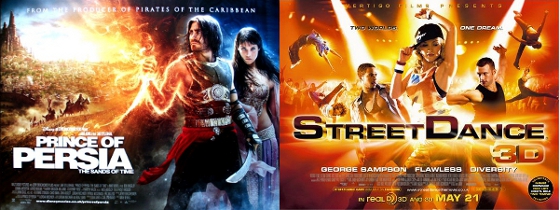
Prince Of Persia (Walt Disney): The latest big budget extravaganza from Jerry Bruckheimer is an adaptation of the 2003 computer game and the story follows an urchin (Jake Gyllenhaal) in the 6th century Persian Empire who is adopted by the king as his heir. He then teams up with a Princess (Gemma Arterton) to stop a villainous nobleman (Ben Kingsley) from stealing a dagger which allows the user to alter time.
Disney don’t actually make that many live action films anymore but Jerry Bruckheimer made billions for the studio with the Pirates of the Caribbean franchise so they have entrusted him and director Mike Newell to bring this action-adventure to the screen. Like a lot of big summer films it has opened in Europe early to avoid the World Cup and despite poor reviews will hope to appeal to less-than-discerning family audiences. [Odeon Leicester Square & Nationwide 12A]
Streetdance (Vertigo Films): A British film hoping to cash in on the trend for 3D films is about street dancers and ballet dance students who are forced to perform together in preparation of a street dance championship.
Shot in 3D, the cast includes the dance acts Diversity and Flawless (who came to fame on the TV show Britain’s Got Talent) and the soundtrack features N-Dubz, Tinie Tempah, Lightbulb Thieves, Chipmunk, and Cheryl Cole. A co-production by Vertigo Films, BBC Films and the UK Film Council, it is getting an unusually wide release for a British film and the backers will hope the 3D factor will boost audiences and profits. British film companies will no doubt be keeping an eye on this as a test of how live action 3D films can fare at UK cinemas. [C’World Shaftesbury Ave., Odeon Tottenham Ct. Rd., Vue West End & N’wide / PG]
Cop Out (Warner Bros.): Kevin Smith’s latest comedy is about two mismatched New York cops (Bruce Willis and Tracy Morgan) on the trail of a stolen baseball card, who find themselves up against a merciless, memorabilia-obsessed gangster.
A critical and commercial disappointment in the US, this was not a film that Smith wrote and working at a major studio seemed like an uncomfortable experience. The ongoing grumbles on Twitter about the critical reaction was perhaps a sign that this film would not rank among his best. [Nationwide / 15]
ALSO OUT
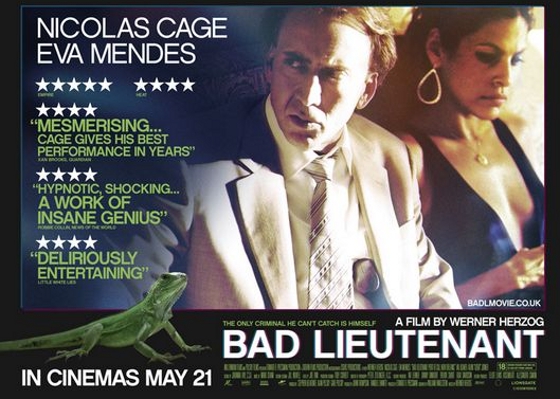
Bad Lieutenant: Port of Call New Orleans (Lionsgate UK): When the remake of Abel Ferrara’s gritty 1994 cop drama was announced with Werner Herzog directing Nicolas Cage in the title role, it sounded like madness. Reset to New Orleans, it is indeed a mad concoction, but also an inspired black comedy with a memorable performance from Cage.
Set in the aftermath of Hurricane Katrina, it follows the increasingly bizarre life of a corrupt, drug addled cop who steals from clubbers, cuts deals with gangsters and has visions of iguanas. Herzog throws in a lot of his usual obsessions (especially animals) and sails very close to utter nonsense, but this is actually surreal, inspired lunacy that will become a late night cult favourite for years to come. [Curzon Soho, Empire Leicester Square & Nationwide / 18]
Heartless (Lionsgate UK): A drama about a young man (Jim Sturgess) born with a large heart-shaped birthmark on his face, who discovers that there are demons on the streets of East London. Directed by Philip Ridley, it co-stars Timothy Spall and Noel Clarke [Apollo Piccadilly Circus, Genesis & Key Cities / 18]
Paradise (ICA Cinema): Director Michael Almereyda makes a ‘home movie’ that he describes as “a description of the world we inherit, fumble around in, and grow into.” [ICA Cinema]
Kites (Reliance Big Entertainment): A Bollywood film directed by Anurag Basu starring Hrithik Roshan and Barbara Mori. [C’Worlds Feltham, Haymarket, Shaftesbury Ave., Ilford, Wandsworth, Wood Green & N’wide]
Pimp (Revolver): A british film starring Danny Dyer. Haven’t we had enough of these? [Key Cities / 18]
Every four years Hollywood studios and European film distributors have to deal with the world’s largest sporting event, the FIFA World Cup, which traditionally keeps potential cinema goers at home in front of the TV.
Added to this, the major studios are frustrated that their expensive blockbusters aimed at young males take a hit from a sporting event which keeps this very demographic glued to televisions for a whole month.
You may have noticed that Iron Man 2 opened in the UK before the US and part of the reason was because Marvel and Paramount wanted to maximise the grosses in territories before the football begins on June 11th.
The Film Distributors’ Association – the umbrella group that represents the companies releasing films at UK cinemas – recently released a trailer that showcased a lot of the films that will be screening this summer and their chief executive Mark Batey said:
“A lot more people love the movies than love football”
Clearly he was trying to be bullish about films at the cinema as an alternative to football on the TV.
But how much of an effect has the World Cup had in previous years?
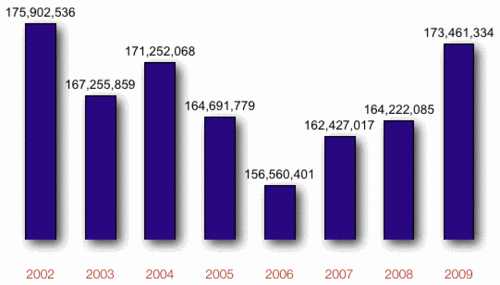
According to data from the UK Film Council, 2002 was a bumper year for cinema admissions – the biggest of the decade in fact – but the very early kick off times (often at breakfast and lunchtime) in the 2002 tournament meant that box office wasn’t affected as much.
But in 2006 when the tournament was hosted in Germany, kick off times in the afternoon and evening meant that UK box office admissions dipped 5% during the tournament.
This summer the tournament is in South Africa and a similar time zone to Europe, which means that it is highly likely that releases during the festival of football will be affected.
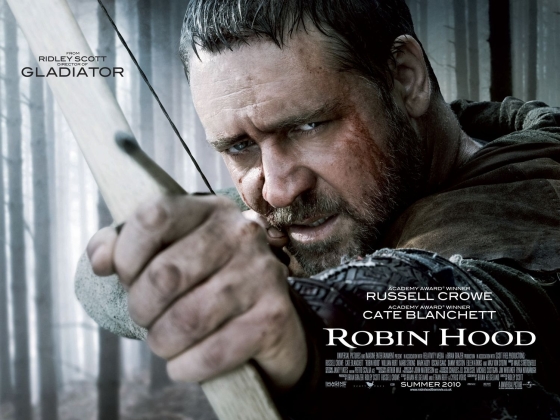
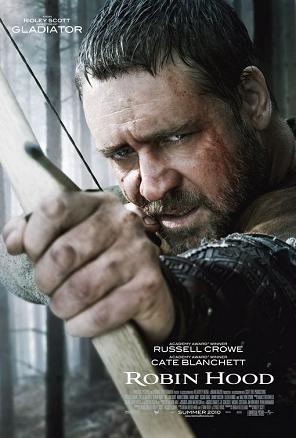
So far Iron Man 2 and Robin Hood are the major studio releases to open early and get a good few weeks box office around the globe before the tournament begins.
But what of the period just before and during the World Cup?
Traditionally, distributors try to counter the males staying in to watch the football by releasing films that skew towards the female audience who want to avoid it.
In this respect Sex and the City 2 (May 28th) is hoping to cash in on this audience, although they are hoping to make their real cash before the tournament starts on June 11th.
The international poster explicitly makes light of the fact that there are ‘other ways to score’.
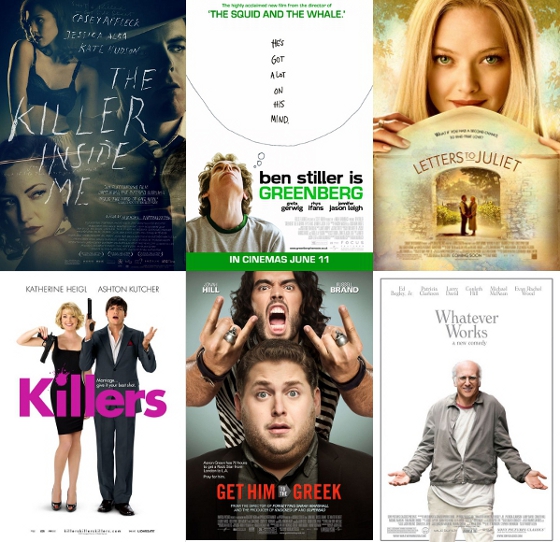
The counter-programming also works for quirkier films not expected to be smash hits like Greenberg (June 11th), MacGruber (June 18th) and Get Him To The Greek (June 25th).
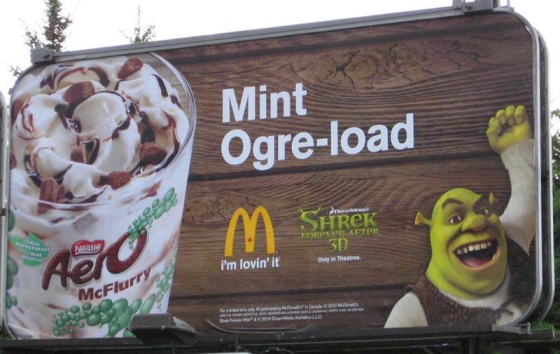
Twilight and Shrek fans will no doubt assure these films a big opening but if England do get to the final – a big if, admittedly – the studios can expect the media coverage and opening grosses to be affected by football fever.
After the tournament ends on July 11th, it is noticeable that the big films return with a vengeance: Inception (July 16th), Toy Story 3 (July 21st), The A-Team (July 28th), Knight & Day (August 6th) and Salt(August 20th).
It is also noticeable that two releases which would could conceivably be released in the summer have been shifted to September, with Jonah Hex (September 24th) and Wall Street: Money Never Sleeps (September 24th).
The Wall Street sequel was actually scheduled for an April release but perhaps Fox felt that it had a better shot at earning more money outside the spring/summer season.
According to the New York Times the library approached Improv Everywhere to stage the scene in order to raise awareness about its Don’t Close the Book campaign, as the library is facing budget cuts of around $37 million.
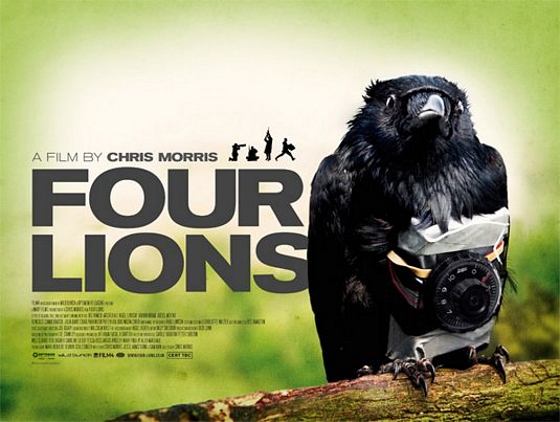
Four Lions marks the feature film debut of Chris Morris as a director and it is the story of four suicide bombers in a Northern town struggling to plan an attack on the London marathon.
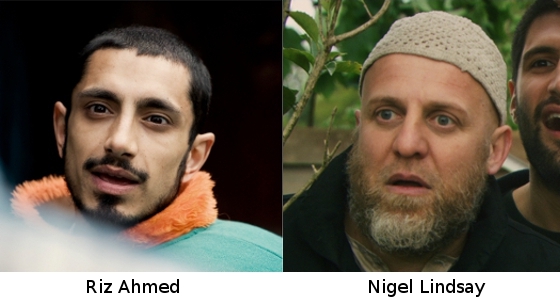
Omar (Riz Ahmed) is disillusioned with how Muslims are treated around the world and determined to lead some kind of attack on the West. His protege is Waj (Kayvan Novak) who is enthralled by the thought of doing something exciting. Meanwhile Barry (Nigel Lindsay) is a white Islamic convert who has issues with Omar, whilst Faisal (Adeel Akhtar) tries to experiment by strapping bombs to crows.
After pioneering work in radio (On the Hour, Blue Jam) and TV (The Day Today, Brass Eye) Morris has always had a sharp, satirical eye for how controversial subjects have been presented to the wider public.
With this film he tackles the issue of contemporary religious extremism by focusing on the naive ineptitude he encountered through his research in to the subject.
In some ways this is a sister film to Armando Ianucci’s In the Loop – whereas that focused on the dark political comedy that lay behind the war on terror, this explores the farcical nature of terrorism on the front line.
I recently spoke with Riz Ahmed and Nigel Lindsay about the film, what it was like working with Morris and why it seems to have touched a nerve at the UK box office.
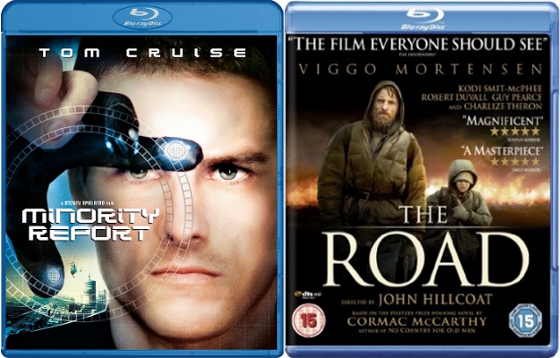
Minority Report (20th Century Fox Home Ent.): Steven Spielberg’s 2002 sci-fi thriller arrives on Blu-ray and has already garnered high praise for the quality of the transfer and extras. Adapted from Philip K Dick’s short story, it is set in Washington, 2054 where crime can be predicted by a specialised police unit using advanced technology and three psychics. When the head of the ‘Precrime’ unit (Tom Cruise) is shocked to see himself as a future murderer, he goes on the run and tries to figure out a murder he is going to commit.
Possibly Spielberg’s best film of the last decade, Minority Report featured a stellar supporting cast (Colin Farrell, Samantha Morton, Max Von Sydow) and a convincingly dystopian view of the future. Like Blade Runner it combines a film noir narrative with a vision of a divided society where technology throws up recurring ethical dilemmas. The production design and distinctive look of the film, especially the visual effects, have made it a favourite in tech circles as the touch screen technology appears to have had an influence on devices (iPhone, iPad) and operating systems (Windows 7) since its release.
The Blu-ray has already got raves for the quality of the transfer. Gary Tooze of DVD beaver has described it as:
“impeccable – representing the film with pin-point authenticity. Achieving the intended appearance so succinctly I’d have to say this image quality is quite perfect – as perfect as I have seen in a while. It appears to look EXACTLY as the film was meant to. If you aren’t keen on the appearance blame the filmmakers not this pristine transfer”
There is actually a second Blu-ray disc featuring a lot of extras in HD as well as the features that were included in the standard 2002 DVD release.
The extras break down like this:
The Future According to Steven Spielberg (18-part – 34:03 in HD)
Inside the World of Precrime (10:11 in HD)
Philip K. Dick, Steven Spielberg and Minority Report (14:19 in HD)
Minority Report: Future Realized (6:22 in HD)
Minority Report: Props of the Future (9:42)
Highlights from Minority Report From the Set (2 pieces): The Hoverpack Sequence (6:06 in HD); The Car Factory Sequence (2:57 in HD)
Minority Report: Commercials of the Future (3:55 in HD)
Previz Sequences: The Hoverpack Sequence Previz (1:43 in HD); Maglev Chase Previz (2:10 in HD)
Previously Released Special Features (duplicated from the last DVD – all in SD)
From Story to Screen (19:03 in total): (2 pieces): The Story/The Debate (9:36); The Players (9:27)
Deconstructing Minority Report (42:06)
The Stunts of Minority Report (26:45)
ILM and Minority Report (6-part – 20-minutes in total)
The Road (Icon Home Entertainment): The film adaptation of Cormac McCarthy’s 2006 novel is a haunting tale of survival in a post-apocalyptic world featuring two outstanding lead performances. It depicts the journey of a father (Viggo Mortensen) and son (Kodi Smit-McPhee) across an America which has descended into savagery after an unspecified environmental and social collapse. Part of the story’s raw power is the absence of any explanation as to why the world is collapsing, which shifts the focus on to the central relationship and the day to day struggle to survive.
Given that the story involves suicide, cannibalism and humans acting like savages you have to give credit to director John Hillcoat (who made the gritty Australian western The Proposition in 2005) and screenwriter Joe Penhall (author of the acclaimed play Blue/Orange) for properly translating the horrors and emotions of the novel into a film. It was this authentic rawness that probably meant that it was never going to be a huge box office hit, but there is much to admire here. The visuals look particularly striking: cinematographer Javier Aguirresa opts for a brownish palette to depict the harsh, ash-ridden environment; the art direction and production design also makes very clever use of rural US locations to create a chilling post-apocalyptic world.
Audiences unfamiliar with the novel may be taken aback by how bleak the story is and the film certainly doesn’t pull its punches: roaming gangs of cannibals, potential suicide and houses filled with half alive bodies are just some aspects that will disturb, although the most notorious scene from the book is omitted. Another thing to look out for is the interesting supporting cast, which is filled with excellent performances – most of which are extended cameos – from Charlize Theron, Robert Duvall and Guy Pearce. The soundtrack by Nick Cave and Warren Ellis strikes an appropriately mournful tone with a notable piano motif reminiscent of Arvo Paart.
About Last Night (Sony Pictures Home Ent.) [Blu-ray / DVD] Atonement (Universal Pictures) [Blu-ray / DVD] Bridget Jones: The Edge of Reason (Universal Pictures) [Blu-ray / DVD] Creepshow 2 (Boulevard Entertainment Ltd) [DVD] Institute Benjamenta (BFI) [Blu-ray & DVD] Night of the Living Dead (Boulevard Entertainment Ltd) [Blu-ray] Ninja Assassin (Warner Home Video) [Blu-ray & DVD] Porcupine Tree: Anesthetize (Kscope) [Blu-ray & DVD] Pride and Prejudice (Universal Pictures) [Blu-ray] Privilege (BFI) [Blu-ray / DVD] Rhythm Is It! (Wienerworld) [Blu-ray] Sex and Drugs and Rock and Roll (EV) [Blu-ray / DVD] Sherlock Holmes (Warner Home Video) [Blu-ray / DVD] Slugs (Boulevard Entertainment Ltd) [DVD] Spread (Optimum Home Entertainment) [Blu-ray / DVD] St Elmo’s Fire (Sony Pictures Home Ent.) [Blu-ray] The Man Who Would Be King (Sony Pictures Home Ent.) [DVD] The Party’s Over (BFI) [Blu-ray & DVD] The Pleasure Girls (BFI) [Blu-ray + DVD] True Blood: Season 2 (Warner Home Video/HBO) [Blu-ray / DVD] True Blood: Seasons 1 and 2 (Warner Home Video/HBO) [Blu-ray / DVD] Valhalla Rising (Momentum Pictures) [Blu-ray / DVD]
American: The Bill Hicks Story is a new documentary about the late comedian whose observations on politics, culture and society still resonate years after his untimely death in 1994.
Although he met with considerable acclaim on the comedy circuit, with an especially passionate following in the UK, Hicks’ stinging observations on issues such as US foreign policy, consumerism, religion, and abortion meant that he never really achieved the mainstream breakthrough of some of his contemporaries.
However, with the release of his work on albums such as Rant in E-Minor and Arizona Bay, he achieved a lasting posthumous success and a significant legacy as a truth-teller, which reached full circle when a second President Bush started another war in Iraq.
I recently spoke with Matt Harlock and Paul Thomas about Hicks, his impact as a comedian, how they tracked down a lot of the previously unseen footage and his appeal in the UK.
Robin Hood (Universal): The second big release of the summer season sees Ridley Scott reunite with Russell Crowe for a revised take on the Robin Hood story. Set in the 12th century, Robin Hood sees an archer named Robin Longstride (Crowe) returning to England from the Crusades with a small band of followers, after King Richard the Lionheart (Danny Huston) has been killed in battle. After a chance encounter with a fallen knight named Sir Robin Locksley, Robin returns to Nottingham and discovers the oppression of the villagers by the Sheriff of Nottingham (Matthew Macfadyen) and the danger posed to the newly crowned King John (Oscar Isaac) from a suspiciously bi-lingual nobleman (Mark Strong).
Different from previous feature films about Robin Hood (The Adventures of Robin Hood, Prince of Thieves) this version has a wider historical scope that is more embedded in the intrigue of the time and has a lavish attention to period detail, even if historians will have a field day picking out inconsistencies and inaccuracies. As you might expect from a Scott production, the technical contributions are generally excellent: but there isn’t much redistribution of wealth going on here as the film is basically an extended origin story. Universal have spent a lot of money making this film and despite a big launch at Cannes this week, the mixed reviews and old fashioned feel of the film may result in relatively disappointing box office. [Empire Leicester Square & Nationwide/ 12A]
American: The Bill Hicks Story (Verve Pictures): A documentary about the US comedian Bill Hicks, who broke through in the early 1990s before dying at the age of 32 in 1994. A brilliantly perceptive and angry voice against the darker side of American culture, he went on to achieve an enduring posthumous status. Directors Matt Harlock and Paul Thomas using a lot of unseen footage of Hicks in performance and an innovative animated approach that weaves in audio and filmed interviews with his family, friends and colleagues. [Curzon Soho, Greenwich P’House, Odeon Covent Gdn., Ritzy & Key Cities / 15]
Lebanon (Metrodome Distribution): Another Israeli film to deal with the haunting legacy of the first Lebanon War is this claustrophobic drama set inside a tank. Directed by Samuel Maoz, it achieved acclaim on the festival circuit last year, winning the Golden Lion at Venice, and is effective at depicting the tension and paranoia of warfare. That said, the central concept wears off around the hour mark and it lacks the power and style of others films to deal with this material such as Beaufort and Waltz with Bashir. [Coronet, Curzon Soho, Everyman, Ritzy & Key Cities / 15]
Vincere (Artificial Eye): An Italian drama based on the life of Ida Delser, the one time mistress of Italian Fascist leader Benito Mussolini. [Chelsea Cinema, Curzons Mayfair, Wimbledon, Renoir & Key Cities / 15]
Eyes Wide Open (Peccadillo Pictures): An Israeli drama about a married, Orthodox Jewish father of four (Zohar Strauss) who falls in love with a twenty two year old male student (Ran Danker). Directed by Haim Tabakman. [Apollo Piccadilly Circus, Odeon Panton Street & Key Cities]
Pandora And The Flying Dutchman (Park Circus): A reissue for this 1951 British film starring Ava Gardner and James Mason as an unlikely couple who come together in unusual circumstances. [BFI Southbank & Key Cities / PG]
Petropolis (Dogwoof): A timely release for this short (43 minutes) documentary about the oil business, directed by Peter Mettler. [ICA Cinema]
Triomf (Contemporary Films): A drama about a dysfunctional family in South Africa set on the eve of the historic 1994 elections. Directed by Michael Raeburn and starring Pam Andrews, Obed Baloi and Vanessa Cooke. [Curzon Wimbledon & Ritzy Picturehouse]
Set in the 12th century, Robin Hood sees an archer named Robin Longstride (Crowe) returning to England from the Crusades with a small band of followers, after King Richard the Lionheart (Danny Huston) has been killed in battle.
After a chance encounter with a fallen knight named Sir Robin Locksley, Robin returns to Nottingham and discovers the oppression of the villagers by the Sheriff of Nottingham (Matthew Macfadyen) and the danger posed to the newly crowned King John (Oscar Isaac) from a suspiciously bi-lingual nobleman (Mark Strong).
When Robin assumes the identity of Locksley, he meets the knight’s father, Sir Walter (Max von Sydow) and his widow, Lady Marion (Cate Blanchett). Gradually he gets caught up in the intrigue of John’s court, the possibility of a French invasion and a society where the poor are taxed heavily to fund foreign wars.
Strikingly different from previous feature films about Robin Hood (The Adventures of Robin Hood, Prince of Thieves), this has a wider political scope, is more embedded in the historical intrigue of the time and has a lavish attention to period detail, even if historians will have a field day picking out inconsistencies and inaccuracies.
This an origin story whose antecedents are not previous versions of the myth, but rather Scott’s own historical epics: Gladiator (2000) and Kingdom of Heaven (2005).
The presence of Crowe as a solider who goes rogue has obvious echoes of his turn as Maximus Decimus Meridius, whilst the depiction of the Crusades and medieval warfare also touches upon an area Scott has visited before.
As you might expect from a Scott production, the technical contributions are generally excellent: the period detail includes some remarkable blending of English locations, built sets and CGI; whilst the editing (Pietro Scalia) and cinematography (John Mathieson) give a real kick to the set-piece sequences.
Crowe and Blanchett have undeniable screen charisma, even if their characters don’t really come alive as other Robin and Marians have done (notably Sean Connery and Audrey Hepburn in Richard Lester’s 1976 film) and some of the villains are disappointingly one-dimensional, with Strong and Isaac given particularly wafer-thin roles.
Audiences might be surprised how little there is here of the familiar Robin Hood template involving a maverick folk hero robbing from the rich to give to the poor.
Given the current economic times, when a proposed new tax on banks is even named after him, this Robin Hood doesn’t really do that much wealth redistribution, which must rank as a missed cultural opportunity.
The screenplay by Brian Helgeland feels like a patchwork of ideas grafted together – it was reportedly rewritten from a project about a heroic Sheriff of Nottingham (!) – and although some of the ideas and avenues it explores are intriguing, there are too many characters left with too little to do. Robin’s gang of men, Van Sydow’s Sir Walter, William Hurt’s Earl of Pembroke (who looks strangely like Ridley Scott) and Mark Addy’s Friar Tuck are all given relatively short shrift.
It is also frustrating that after 139 minutes we end up where most Robin Hood films begin, making you wonder why they got sidetracked with all the historical sub-plots instead of getting directly to the meat of the legend.
That said, there are some unintentional cultural touchstones: the unifying of rival English factions to face a common enemy has echoes of the new UK coalition government, the plight of the poor mirrors recent Greek protests at austerity measures and – most timely of all – French audience members may be raising some eyebrows later tonight when the film opens the Cannes film festival.
Universal possibly see this as the beginning of a franchise, but in order for that to happen it will have to perform very strongly in a competitive climate at the global box office.
There is something pleasingly old fashioned about this version of Robin Hood compared to the superhero pyrotechnics Hollywood unleashes on the public every summer, but whether it can achieve the same level of critical and commercial success as Gladiator is doubtful.
The 63rd Cannes film festival kicks off tomorrow and below are all the films showing in the different strands.
On paper this year doesn’t have the star power or auteur driven appeal of previous festivals, but among the films competing for the Palme d’Or that cinephiles have high hopes for include: Mike Leigh’s Another Year, Doug Liman’s Fair Game, Mahamat Saleh-Haroun’s A Screaming Man, Rachid Bouchareb’s Outside of the Law, Oliver Schmitz’s Life Above All, Nikita Mikhalkov’s Burnt by the Sun 2: Exodus, Alejandro Gonzalez Inarritu’s Biutifuland Ken Loach’s late entry Route Irish.
In the Un Certain Regard strand Hideo Nakata’s Chatroomand Cristi Puiu’s Aurorahave already been attracting buzz and will be looking for a commercial bounce from the festival.
The big out-of-competition premieres include: Ridley Scott’s Robin Hoodstarring Russell Crowe which launches the festival tomorrow on the same day it gets released around the world; Stephen Frears’ Tamara Drewe, a live-action adaptation of the newspaper comic strip with Gemma Arterton and Luke Evans; Oliver Stone’s Wall Street: Money Never Sleeps, the sequel to his 1987 film which stars Michael Douglas, Shia LaBeouf and Carey Mulligan; and Woody Allen’s You Will Meet a Tall Dark Stranger which features Freida Pinto, Anna Friel, Anthony Hopkins and Antonio Banderas.
Given last year’s vintage festival, which included Pixar’s Up, Michael Haneke’s Palme d’Or winner ‘The White Ribbon‘, Jacques Audiard’s runner-up ‘A Prophet‘, Quentin Tarantino’s ‘Inglourious Basterds‘ and the controversy of Lars von Trier’s ‘Antichrist‘, this year may struggle to achieve a similar level of quality or attention.
When the selection was announced in Paris a few weeks ago, some observers were disappointed by the absence of Terence Malick’s ‘The Tree of Life‘ (which couldn’t be finished in time), Christopher Nolan’s ‘Inception‘, Darren Aronofsky’s ‘Black Swan‘ and Clint Eastwood’s ‘Hereafter‘. Despite that, a festival can always throw up plenty of surprises, even if some films are destined for oblivion.
* For a PDF of the full calendar schedule click here *
A sweeping romance told in flashback, it was nominated for 10 Oscars and won 5, though much to Lean’s chagrin it lost Best Picture to The Sound of Music. Full of stunning imagery and sequences, including a frozen dacha, the cavalry charge in Moscow and a battle seen through a pair of spectacles, it is tailor made for the Blu-ray format. Warner Bros appear to have done an amazing job on the transfer and extras include everything from the previous 2-disc DVD edition, plus a new 40-minute documentary, with the discs coming in a large 50-page digi-book including photos, essays and bios. [Blu-ray / DVD]
Where the Wild Things Are (Warner Home Video): Maurice Sendak’s much loved 1963 children’s book has been expanded to a feature length film about a young boy (Max Records) who ventures to a magical land where he is anointed king by a group of strange creatures. Charming and beautifully filmed, it marks a change of pace for director Spike Jonze, who deserves credit – along with co-screenwriter Dave Eggers – for preserving the spirit and tone of the book.
The casting is excellent. Records is not a typical child actor and has a pleasingly raw charm. The voices of the wild things are superb with James Gandolfini an inspired choice as Carol (the wild thing Max becomes closest to) as it brilliantly plays off his Sopranos persona, highlighting his joy, vulnerability and anger. Chris Cooper, Lauren Ambrose and Paul Dano also chip in with excellent vocal performances, making their characters as varied and complex as they should be. The Australian locations are also beautifully captured by cinematographer Lance Acord. The transfer is good (although a little dark in places) and the extras are solid, featuring an array of amusing videos from the set. [Blu-ray / DVD]
A Scanner Darkly (Warner Home Video): The best adaptation of a Philip K Dick novel since Blade Runner is this 2006 film set in a not-too-distant future where America has lost its “war” on drugs, and an undercover cop (Keanu Reeves) is one of many people hooked on Substance D, which causes its users to develop split personalities, which causes majors problem in trying to track down a notorious drug dealer and figuring out who he really is.
Directed by Richard Linklater, it was filmed in live-action, and then animated using the same process used in his previous film, “Waking Life”, which perfectly suits the paranoid themes of the book which include the perils of drug abuse the surveillance society. Beacuse this was transfered directly from a digital source, it looks pristine with with terrific detail and depth. The extras are the same as the DVD release, including two insightful featurettes “One Summer in Austin: Filming A Scanner Darkly” (26 mins) and and “The Weight of the Line: Animation Tales” (20 mins), both of which include a lot of video diary footage. The audio commentary from Linklater, Phillip K. Dick’s daughter Isa Dick-Hackett and producer Tommy Pallotta is also very insightful with regard to Dick’s life and work. [Blu-ray / Normal]
[ad]
ALSO OUT
44 Inch Chest (Momentum Pictures) [Blu-ray /DVD] Adoration (Drakes Avenue Pictures) [DVD] Battlestar Galactica: Seasons 1-5 (Universal/Playback) [Blu-ray / DVD] Battlestar Galactica: The Plan (Universal/Playback) [Blu-ray / Box Set] Caligula: Uncut Edition (Arrow Films) [Blu-ray / DVD] Charlie Chaplin: The Great Dictator (Park Circus) [Blu-ray / DVD] Charlie Chaplin: The Kid (Park Circus) [Blu-ray / DVD] Delgo (20th Century Fox Home Ent.) [DVD] Departures (Arrow Films) [Blu-ray / DVD] Dorothy (Optimum Home Entertainment) [Blu-ray / DVD] Eric Rohmer: The Essential Eric Rohmer (Artificial Eye) [DVD] George Carlin: Collection – Volume 2 (Anchor Bay Entertainment UK) It’s Complicated (Universal Pictures) [Blu-ray / DVD] Nowhere Boy (Icon Home Entertainment) [Blu-ray / DVD] Paul Blart – Mall Cop (Sony Pictures Home Ent.) [Blu-ray / DVD] The Day of the Jackal (UCA) [DVD] Toy Story/Toy Story 2 (Walt Disney) [Blu-ray / DVD]